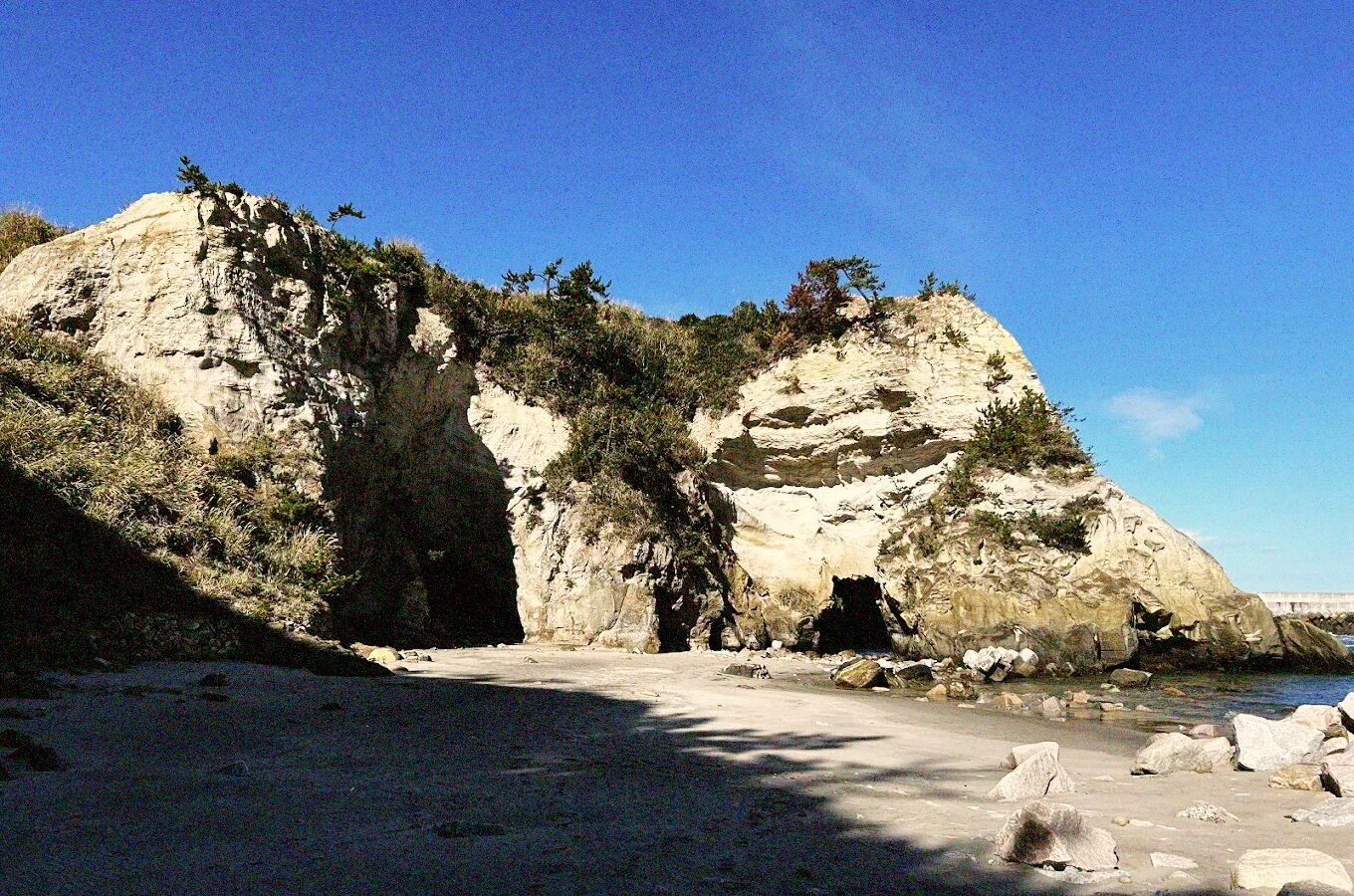
There are places that hold a particular kind of grief. Not the general weight of history, nor the diffuse atmosphere of the old and the strange, but something precise, a named grief, tended in a specific place for decades. Sai no Kawara, in a sea cave on the Usuiso coast of Iwaki, Fukushima, is one such place.
It is less than 30 kilometers from the Fukushima Daiichi Nuclear Power Plant. The beach above the cave was once considered the most beautiful in the prefecture and, by some accounts, among the hundred most beautiful beaches in Japan. The March 11, 2011, tsunami changed most of that.
The Name
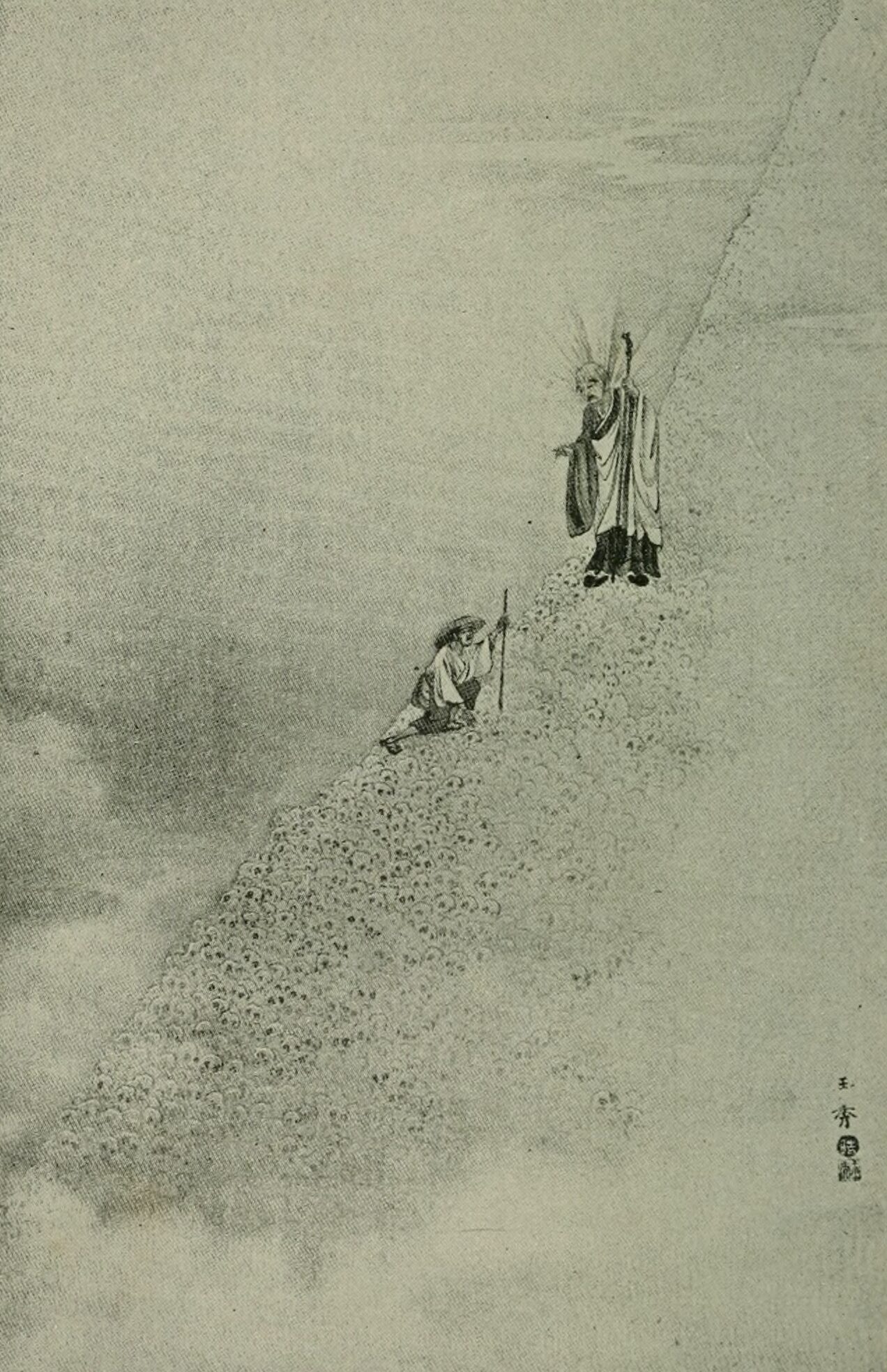
Sai no Kawara roughly translates as the Riverbed of Souls, specifically the riverbank where the souls of children who die before their parents wait. In Japanese Buddhist folk belief, children who die young, including those lost before birth, find themselves on the banks of a cold river in the underworld. They cannot cross without their parents, so they wait, building small cairns of stones on the riverbank, stacking them as a form of prayer, until demons knock them down and they must begin again.
Jizo Bodhisattva, the guardian of children in the afterlife, the red-bibbed figure found at sacred sites across Japan, takes pity on them. He gathers them under his robes and protects them from demons. At other Sai no Kawara sites across Japan, Jizo statues stand as his representatives, each believed to shelter a soul.
This cave was consecrated as one such site. The Jizo statues inside, erected by a local stonemason beginning in 1985, each represent a child who did not survive. The toys laid out in the sand, Gundam model kits, dolls, half-buried among offerings of sweets, were placed by grieving hands that knew exactly which child they were for.
Before the Tsunami
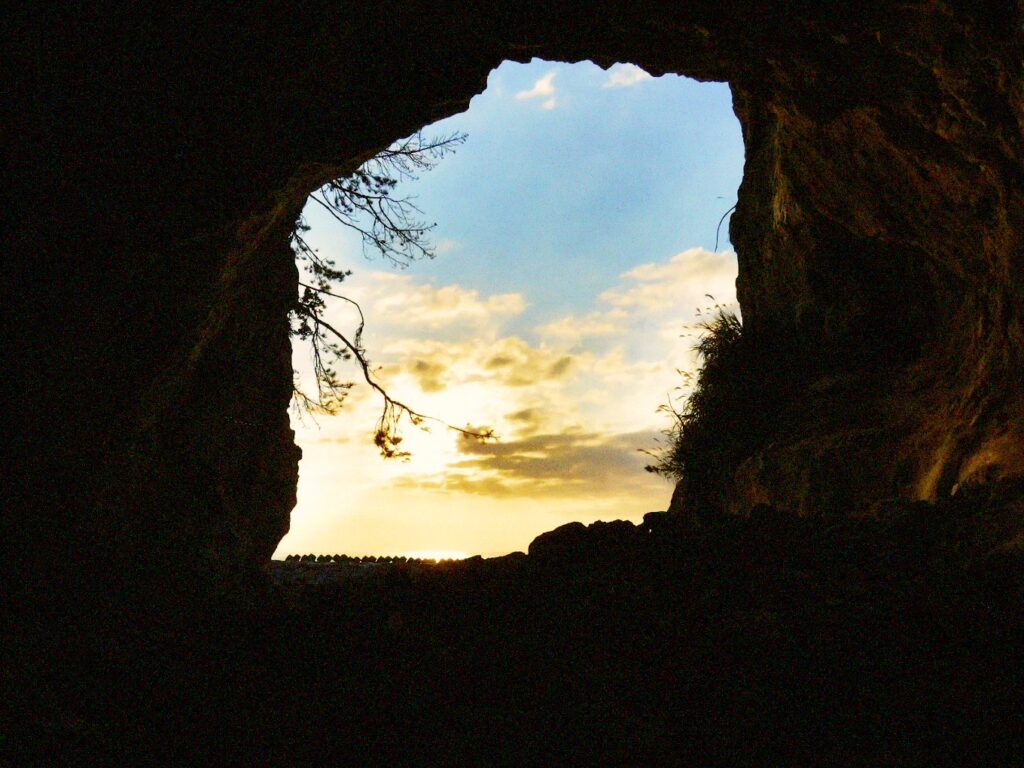
The cave was once accessible from Usuiso Beach, low-ceilinged and deliberately set apart from ordinary time. Inside, tiered platforms of Jizo statues in the dim light, with a large statue of Kannon Bodhisattva, the embodiment of compassion, at the entrance. Children’s toys were arranged in the sand. The scent of incense and salt.
A large Kannon at the threshold of a cave full of children’s souls is a specific piece of theology, a compassion standing guard over grief, the merciful face at the door to the place where the waiting happens.
Locals spoke of the cave in hushed tones even before the disaster. In those accounts, an encounter was not a matter of whether but when. A ghost was sometimes seen as a young boy. Visitors reported headaches with no other explanation. Psychics who came to investigate found themselves unable to continue. The warning not to touch the stones on the riverbank was said to leave the visitor open to something they had not asked for.
March 11, 2011
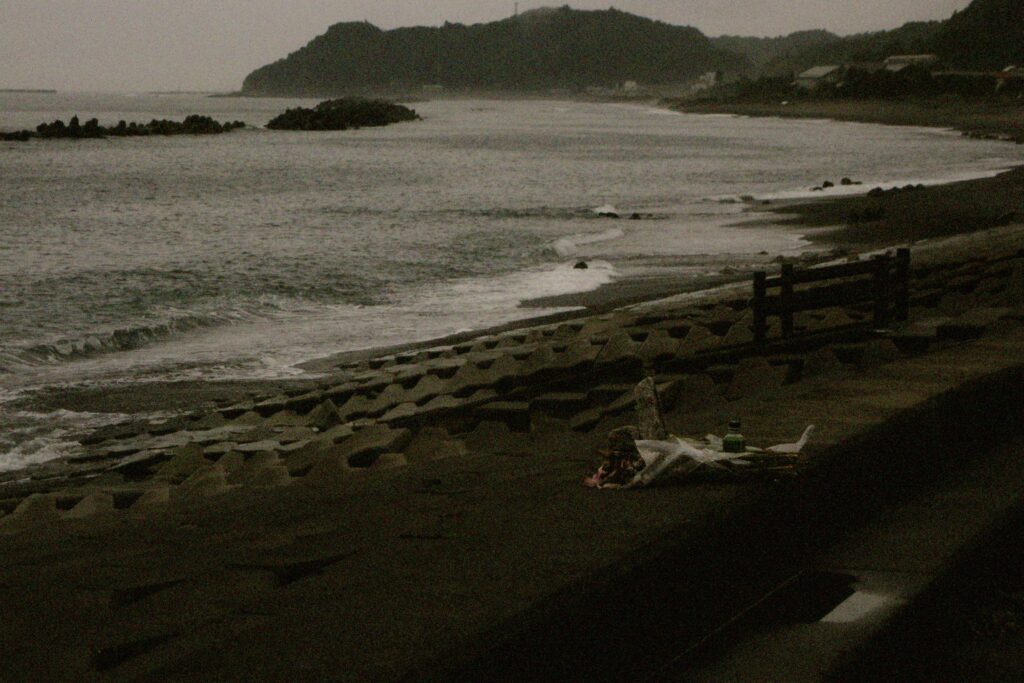
That afternoon, the ground in Iwaki shook for 190 seconds. A tsunami wave that had crossed the open ocean at the speed of a jet plane reached the coast and bulldozed beachside homes. The ground sank beneath the churning water. More than 300 people died in Iwaki. The beach above the cave, which had drawn the most summer visitors of any shore in the prefecture, was closed. It would not reopen for six years.
The tsunami entered the cave.
What it did there can be partly understood from what was found afterward. In places, the roof had collapsed. Boulders four and five meters across, moved by the force of the water, now filled much of the interior. The Jizo statues that had stood in tiers on their platforms were buried under sand, swept into the harbor, or dragged back into the Pacific. The large Kannon at the entrance was gone.
During the cleanup that followed, workers discovered the cave’s interior walls covered in handprints, all the size of children’s hands.
What Was Recovered
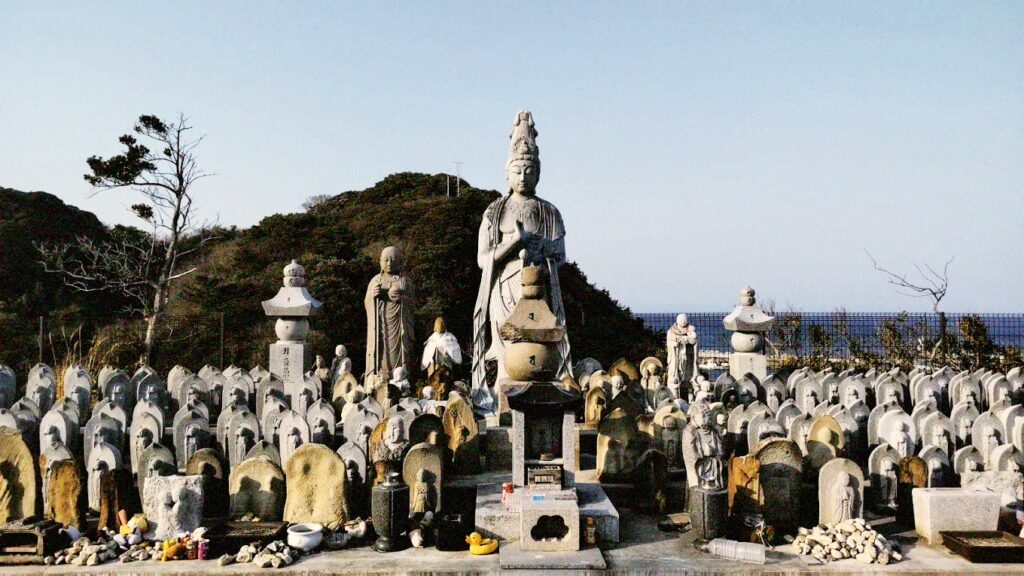
Volunteers came. Local residents and people from outside the prefecture climbed over the piled rocks and dug in the sand. They unearthed what they could. Many of the Jizo statues that had been buried were recovered and moved to high ground above the cliff for a second enshrinement in the open air, looking out over the harbor where the cave entrance had once opened.
Someone climbed back into the ruined cave afterward, over the mountain of boulders, through the collapsed interior, to the far recesses where toys and dolls had once been arranged, leaving new offerings. Small dolls. Artificial flowers. A thousand paper cranes. The person who left those offerings understood that the essence of the faith was still in the cave itself, not in the statues now resting safely on high ground. They climbed the rocks anyway.
The cave today is a dead end. The interior has been more than half filled with the rocks the tsunami carried in. Where tiers of Jizo once stood, there is stone. Where the Kannon once stood at the entrance, there is an absence.
The Weight of the Place
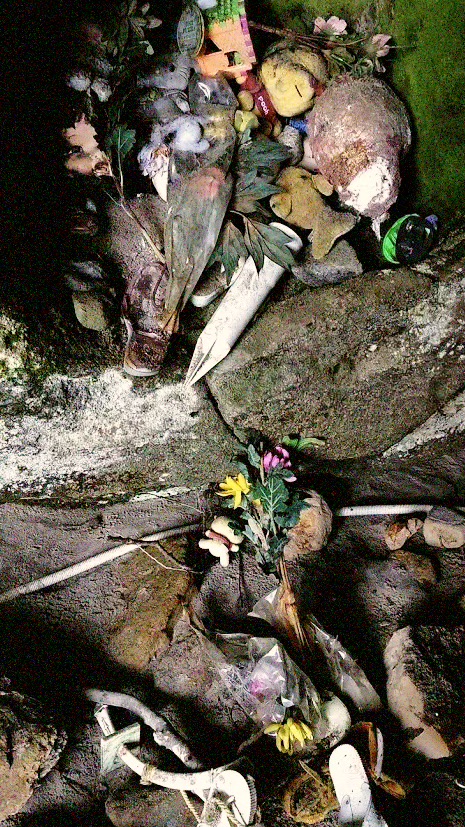
This is not a place to visit for the atmosphere, though the atmosphere is there. What it holds is more specific and more painful, the concentrated grief of parents who lost children, formalized as a sacred site, tended for decades, struck by a disaster that killed hundreds in the same community, and then recovered incompletely and irreversibly by people whose faith required them to climb over boulders to bring flowers and paper cranes to the right place.
The stones on the riverbank are not picked up or thrown. This is what the locals say. It is simply what the place asks. You are not the reason this place exists.
Come to pay respects. Come knowing what the ground has absorbed, what the sea has taken, and what human hands have brought back.
Getting There
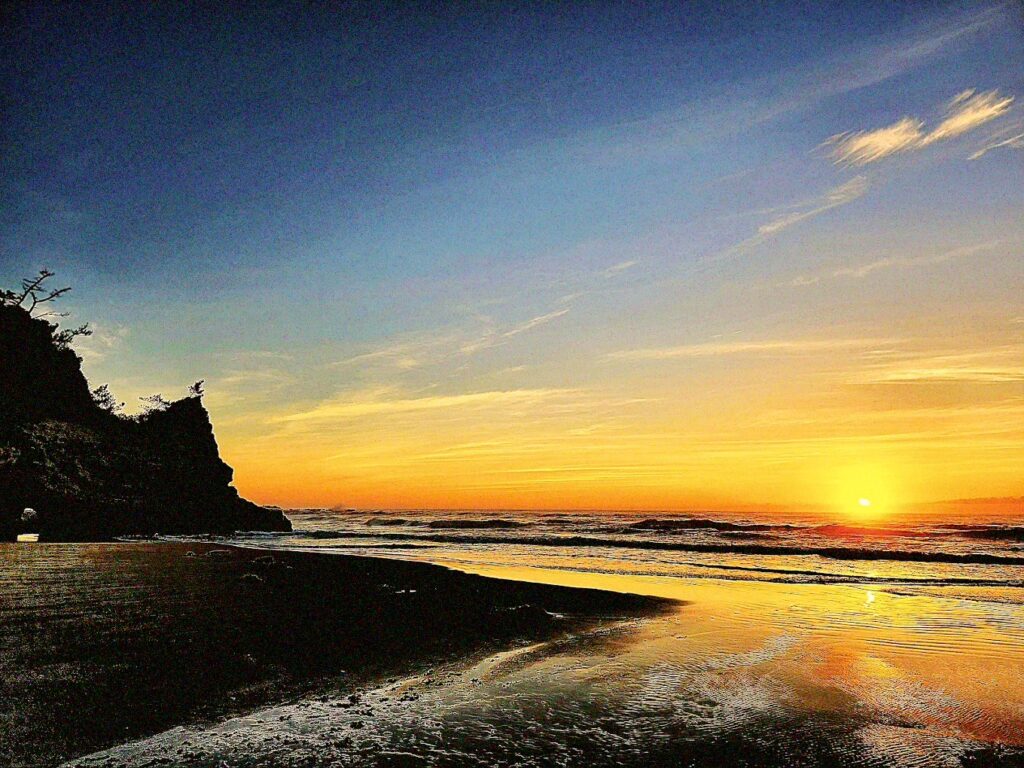
Sai no Kawara is located at Kitanosaku-352 Tairausuiso, Iwaki, Fukushima. The cave is accessible on foot from Usuiso Beach. The Iwaki Earthquake Memorial and Future Museum is nearby and provides context for the scale of what happened to this coastline. Radiation levels on Usuiso Beach have been confirmed by Fukushima Prefecture health authorities to have returned to pre-disaster levels.
This is not a place to visit lightly.
Related: Mount Osore — The Gateway to the Afterlife/ Harakiri Yagura — The Cave Where a Shogunate Died