Kamakura is the kind of place that lulls you. Sunny beaches, great street food, and the giant Buddha sitting serenely above it all. It pulls visitors in the way a place with good bones always does, with historical significance worn lightly and the past quietly folded into the present. What most visitors don’t see, because it isn’t on the main circuit and it isn’t trying to be, is the city’s other side. Kamakura is also home to one of the most concentrated collections of shinrei spots in Japan, cursed locations with a heavy history, places where what happened refuses to fully settle.
Harakiri Yagura is among the heaviest of them.
The Approach
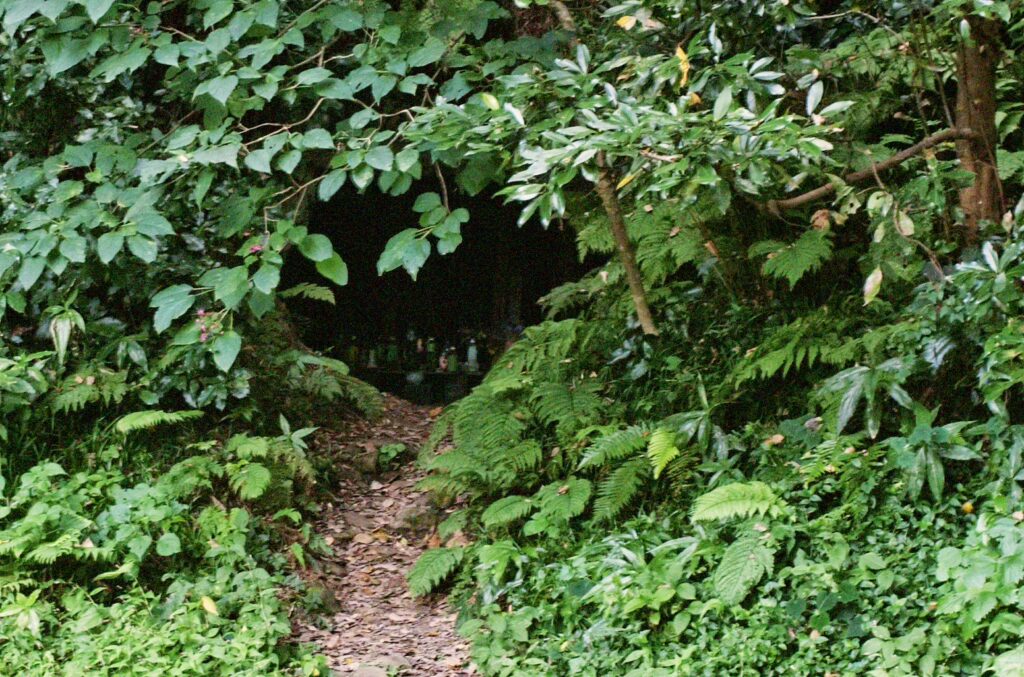
Past the crowds at Tsurugaoka Hachimangū, Kamakura’s grand central shrine, the first stop on most visitors’ itineraries, and north into the quieter residential streets, there is a hill. Up that hill, in an area that makes you wonder whether you’re allowed to be there, is the entrance to the site. This is clearly not a tourist spot. Nothing announces it. The entrance is fenced off with a sign warning of rockfall and landslide risk. My wife, who is consistently smarter than I am in these situations, stays outside. I climb the fence.
It is golden hour. The sun is setting. The vegetation around the cave is dense and intensely green, the kind of green that shaded, undisturbed places in Japan often are, the kind of green that feels like it has been growing quietly for a very long time without anyone asking it to stop. Despite the light, the place feels heavy. Scary in a way that registers in the body before the mind has time to form an opinion about it.
I hadn’t researched the history beforehand. I didn’t know what had happened here. I felt the heaviness before I knew the reason for it.
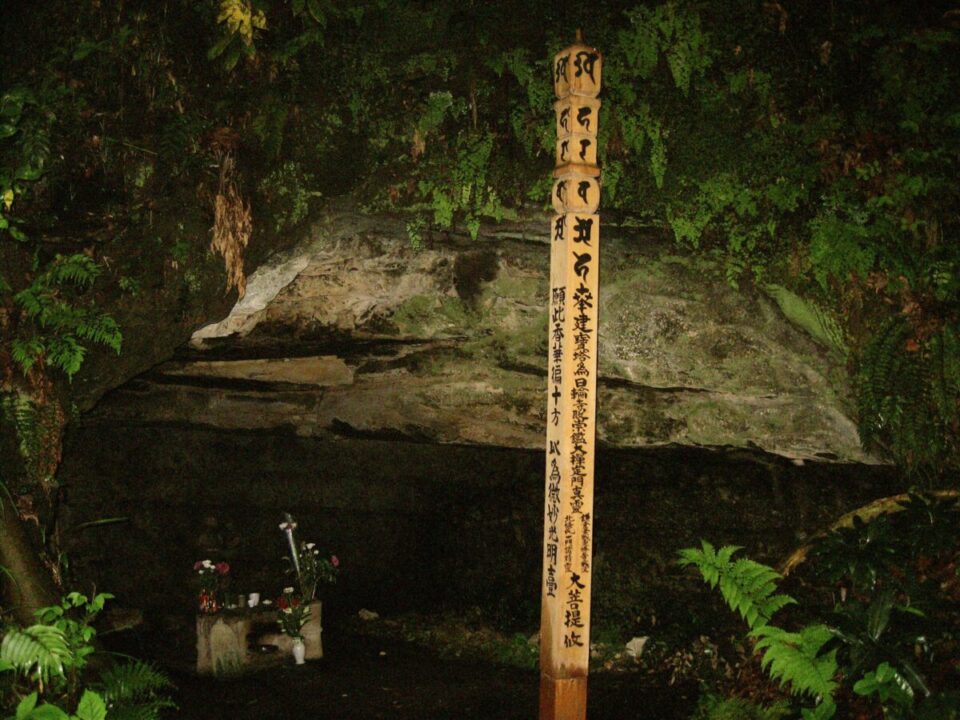
Out of instinct and something that felt like respect, though I couldn’t have named it that at the time, I look from the outside rather than entering. Inside the cave: an urn. A small tomb. Flowers, placed recently. I take photographs. Later, looking at them, it’s clear that orbs appear in one of the shots. I’m not in the habit of making claims about photographs, and I’m aware of all the rational explanations for lens flare and particulate matter. I’m merely recording what was there and what I saw.
The History — Layer One: 1247
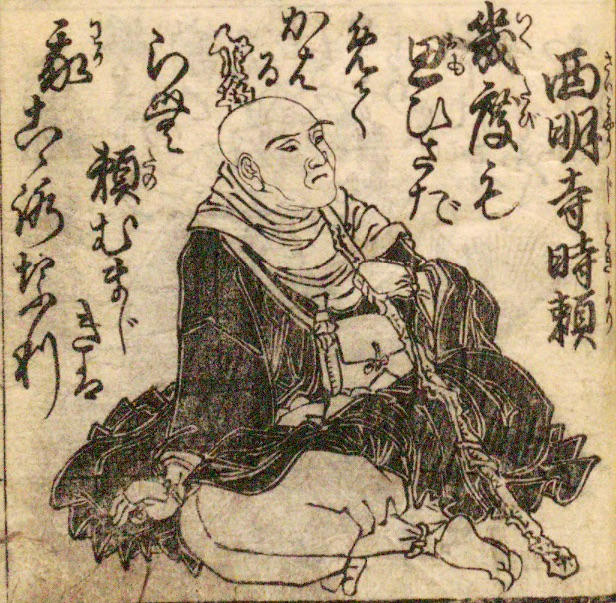
A yagura is a horizontal cave tomb carved from the soft limestone hills around Kamakura. There are at least 1,500 such tombs in the region. Most hold the remains of samurai. This one holds the memory of something larger than a burial.
To understand what happened here, you need to know the basic structure of medieval Japanese power. The Kamakura Shogunate was nominally ruled by a shogun, a military leader who governed in the emperor’s name. But real power lay with the Hōjō clan, who served as regents behind the shogun. Below the Hōjō in influence, yet far above everyone else, sat the Miura clan, a warrior family that had helped build the shogunate from its foundation. When the Hōjō decided the Miura had grown too powerful, there was nowhere for the Miura to go but down.
In 1247, Miura Yasumura gathered about 500 of his family members inside the Hokke-dō, the lotus hall built to honor the shogunate’s founder, Minamoto no Yoritomo. They lined up before his portrait. A memorial hymn was chanted, and then, together, they took their own lives. The floor turned red.
Their motive was political: Hōjō Tokiyori, the regent who wielded real power behind the shogun, viewed Yasumura’s influence as a threat, burned Yasumura’s mansion, and left his family with no retreat but the Hokke-dō. The sole witness to what happened next was a Buddhist priest hiding in the ceiling. He recorded that Yasumura carved his own face with a sword before dying to prevent identification.
Mōri Suemitsu was a senior ally of the Miura clan, and his wife was Yasumura’s sister, making this her brother’s death and her husband’s choice. When Suemitsu considered fleeing rather than dying with them, she told him: “Abandoning my brother is not something a samurai would do.” He stayed and died alongside the Miura. His descendants would later produce Mōri Motonari, one of the great warlords of the Sengoku period, the era of constant civil war that followed the Kamakura shogunate’s eventual collapse. The dynasty the Hōjō built on the Miura’s destruction did not endure.
The History — Layer Two: 1333
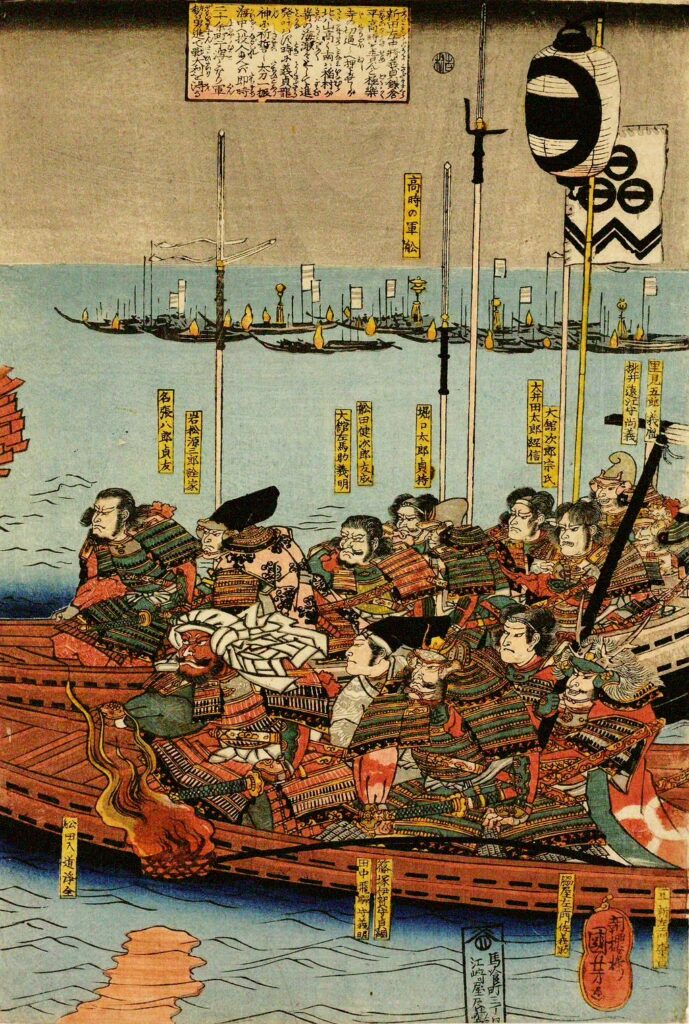
The Miura yagura commemorates 1247. The site also marks a second catastrophe, eighty-six years later, that ended the shogunate entirely.
The Hōjō, having crushed the Miura to consolidate their power, ruled unchallenged for nearly a century. Then Emperor Go-Daigo, weary of military clans governing Japan in the imperial name, decided to reclaim power. He sent forces under the general Nitta Yoshisada against Kamakura, the shogunate’s capital. Kamakura is nearly impossible to attack overland: ringed by steep hills and accessible through only a handful of narrow passes. Two days of fighting at those passes produced heavy losses and no breakthrough.
Yoshisada then completely encircled the city by crossing at low tide along the beach at Inamuragasaki Cape, a maneuver that passed into legend as the sea parting for a thrown golden sword.
Kamakura fell. The last Hōjō regent, Takatoki, retreated to Toshoji Temple, the Hōjō family’s own temple, directly beside this site. He burned it to the ground and, with 870 of his clan, committed seppuku. A stone stele erected at the site in 1918 records his final moments: as he lay dying, he watched from afar as the lights and smoke of fires consumed the shops and residences of the entire city of Kamakura, the city his family had ruled for 150 years. The Kamakura Shogunate ended that morning.
The site you are looking at, the cave, the urn, the flowers, sits at the intersection of both events. The Miura, who died here first. The Hōjō, who built a dynasty on that death and then died here as well. The ground has absorbed both.
The Reports
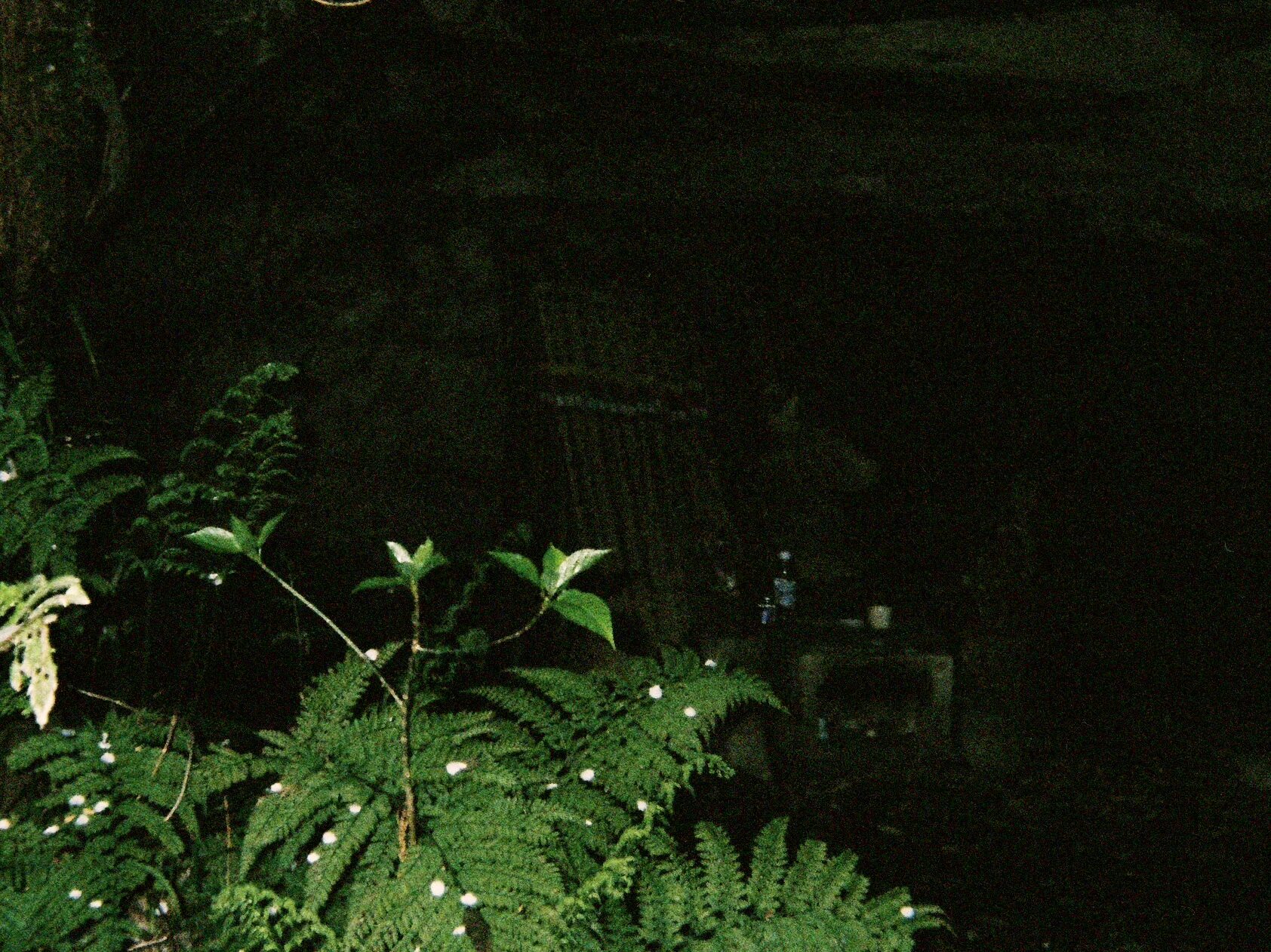
Harakiri Yagura has one of the more concentrated records of ghostly activity among Kamakura’s many shinrei spots. Some of what circulates online is nonsense. A claim that Google Maps shows the site as perpetually busy after midnight because ghosts are gathering there ignores that Google’s congestion data is derived from GPS signals, and ghosts do not carry smartphones. Most of the witching-hour foot traffic comes from groups of young people visiting late at night to frighten themselves. The local neighborhood association has, at various points, posted notices asking people to stop coming after dark.
What remains after you filter out the noise: people reporting a sense of physical unease on approach, dizziness, nausea, and an atmospheric heaviness, consistent enough across independent accounts to form a pattern. Sightings of fallen warriors. The sense, described by multiple visitors, that something is wrong here before they know why.
That last one I can speak to directly. I felt the weight before I knew what caused it. I don’t know what to do with it except to note it honestly.
The site belongs to Hōkai-ji Temple and is formally designated a sanctuary. Entry is prohibited except for prayer for the dead. I climbed the fence anyway, which I mention not as a recommendation but as a fact about the kind of fool I was that afternoon and what I found when I got there.
Getting There
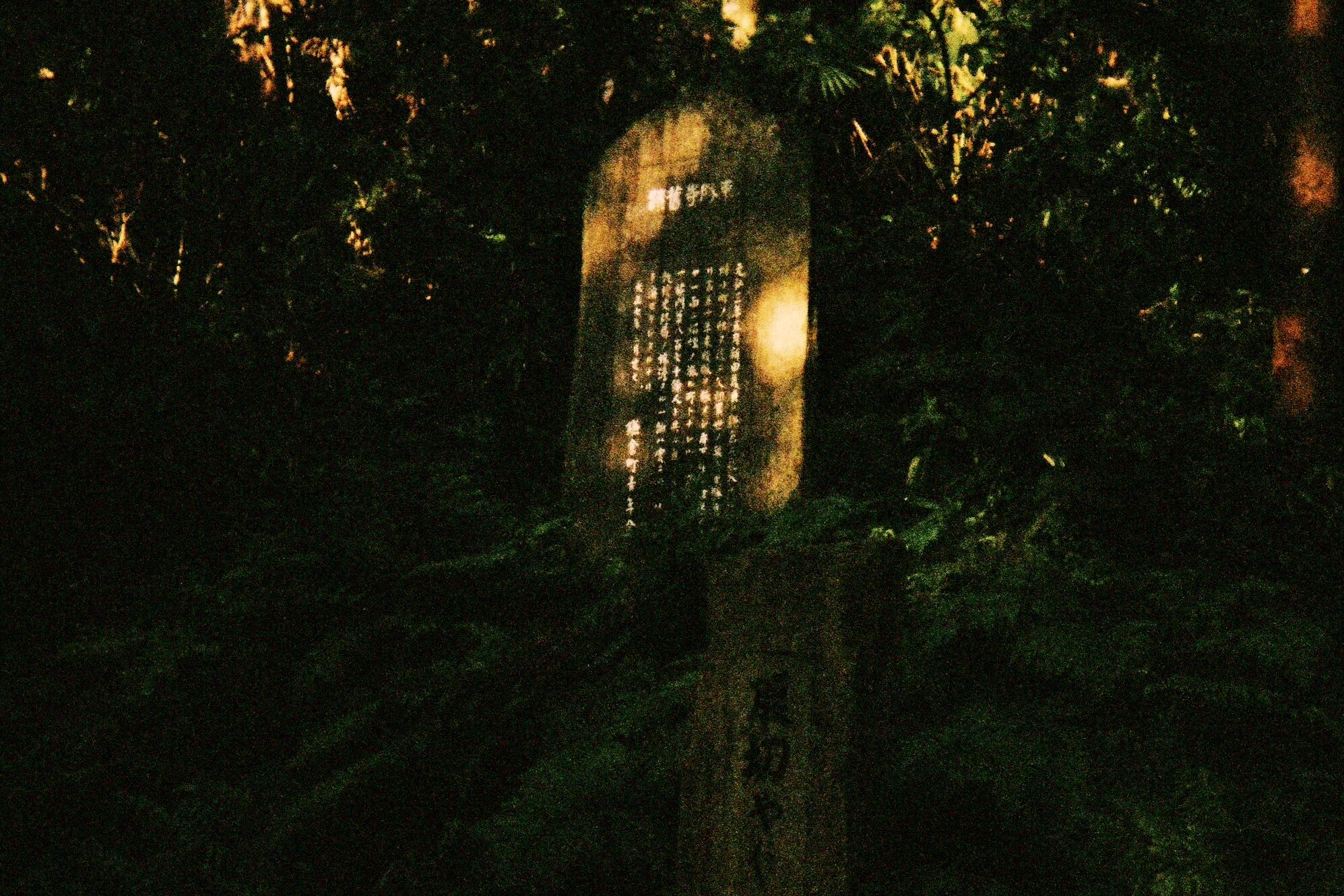
Harakiri Yagura is approximately a fifteen-minute walk from Kamakura Station, north of the ruins of Toshoji Temple near the Gion-yama Hiking Course. The residential streets leading to it are quiet and unmarked. The site is officially closed.
Visit in daylight. The flowers on the tomb are placed by someone who still tends this place.
Kamakura will give you the Buddha, the beaches, and the excellent street food. It will also give you this if you look for it. Most visitors don’t. That is, perhaps, sensible.
Related: Yotsuya Kaidan — Japan’s Most Famous Ghost Story/ Inokashira Park — The Curse of the Jealous Goddess