I was in Takamatsu on Shikoku, where my wife is from. I do not drive, and the nearest convenience store is a good twenty minutes away, so going out on foot for the vice I never managed to quit is a small pilgrimage. Nicotine, now in pouch form, is a mere trade-down from my once-heavy cigarette habit. Oh, sweet nicotine pouches, which have started colonizing the konbini shelves here the way they have colonized America and are a hit with Gen Z. Oh, to be young again. I welcomed them in like an old friend, that nasty cigarette smoke now dressed up in new regalia. The big bad wolf is in sheep’s clothing. My lungs are better now, but my gums pay the tab. The old friend I should really stop seeing. I could write a whole sonnet to nicotine right here, so let me stop before I do. My wife scowls every time she catches one riding in my lip, and she has every right to. I tell her they help me write. All they do is help me fidget harder, and stacked on top of the coffee I am never not drinking, they leave me stimmed to the gills and humming faintly at the desk, which I have decided is close enough to writing. The art of procrastination
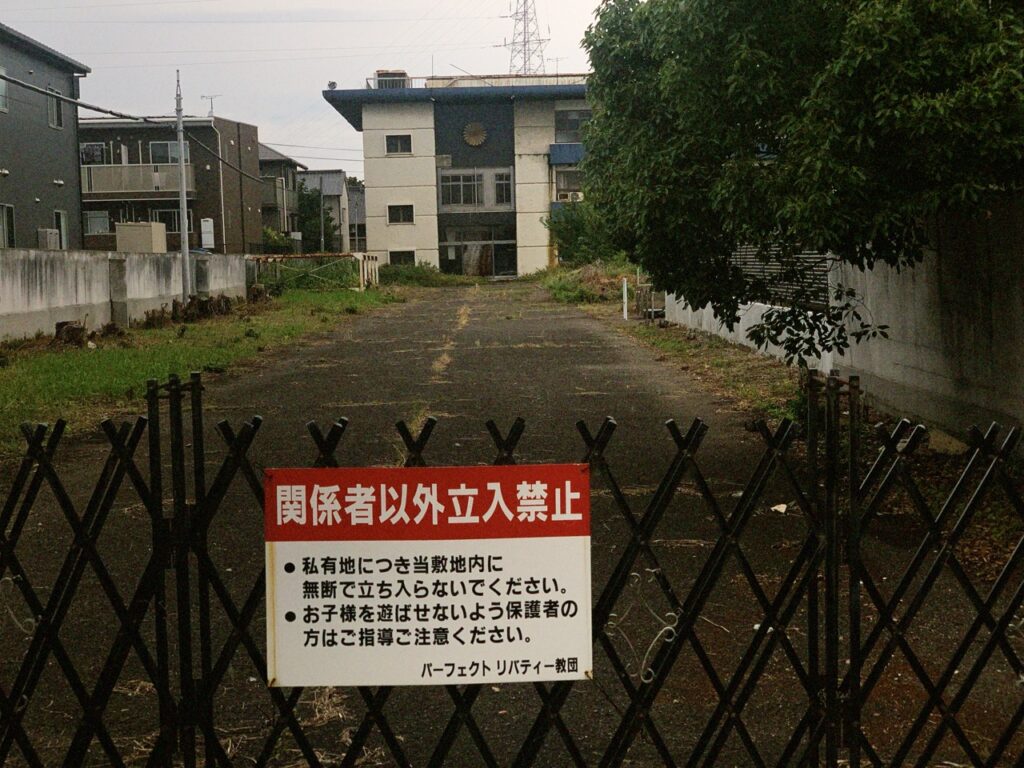
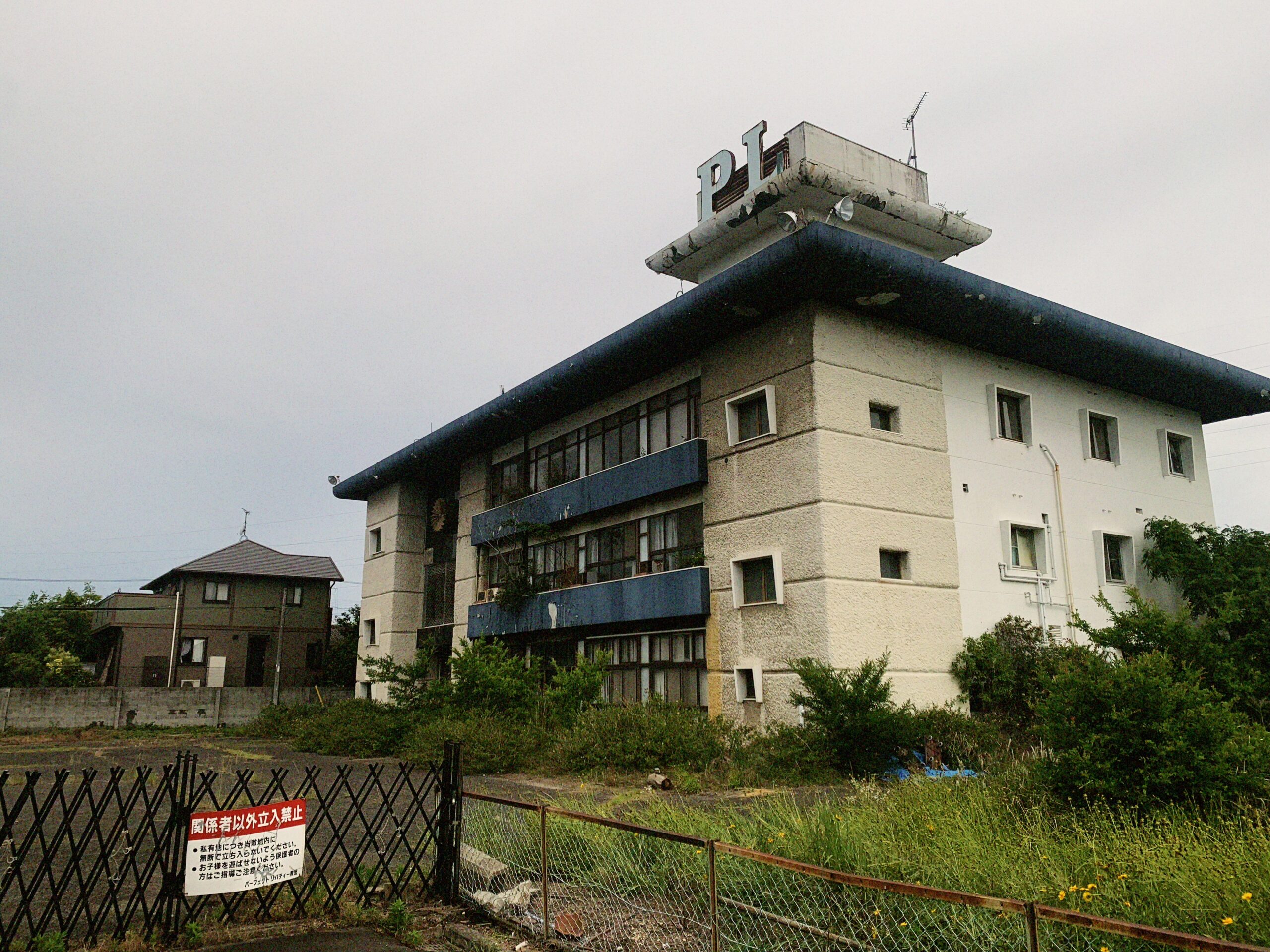
On the walk back, where I somehow crossed paths with a pair of Mormon missionaries from Utah, I passed an old building half-swallowed by vegetation. I took it for an abandoned police station. Then I got closer and read the kanji set beside the sealed-off gate. Kyokai. Church. I looked to my right and found two green capital Roman letters on a battered sign. PL.

I brought it up to my wife back at the house, a sneaky pouch tucked in my lip, and she told me it was a cult called Perfect Liberty. I snorted. Liberty. A word worn thin these days. I had never heard of them, but a twitchy, over-caffeinated search pulled up an image of a white tower, and it assembled itself from an old memory lodged somewhere in my foggy head. Years ago, when I still lived in Kansai, I used to drive up from Wakayama in a kei car three sizes too big for my frame, clown-car style. Somewhere along that road, a pale tower rose over the landscape like a papier-mâché finger pointing at the sky in a frankly phallic fashion. I never learned what it was. I never once stopped to look. I had pressing matters involving binge drinking in Osaka after a long week of half-assed English teaching. I stayed curious about it all the same, and now here it was, waiting, attached to a strange religion I had just found rotting quietly under the ivy on a side street in Takamatsu.
The Tower
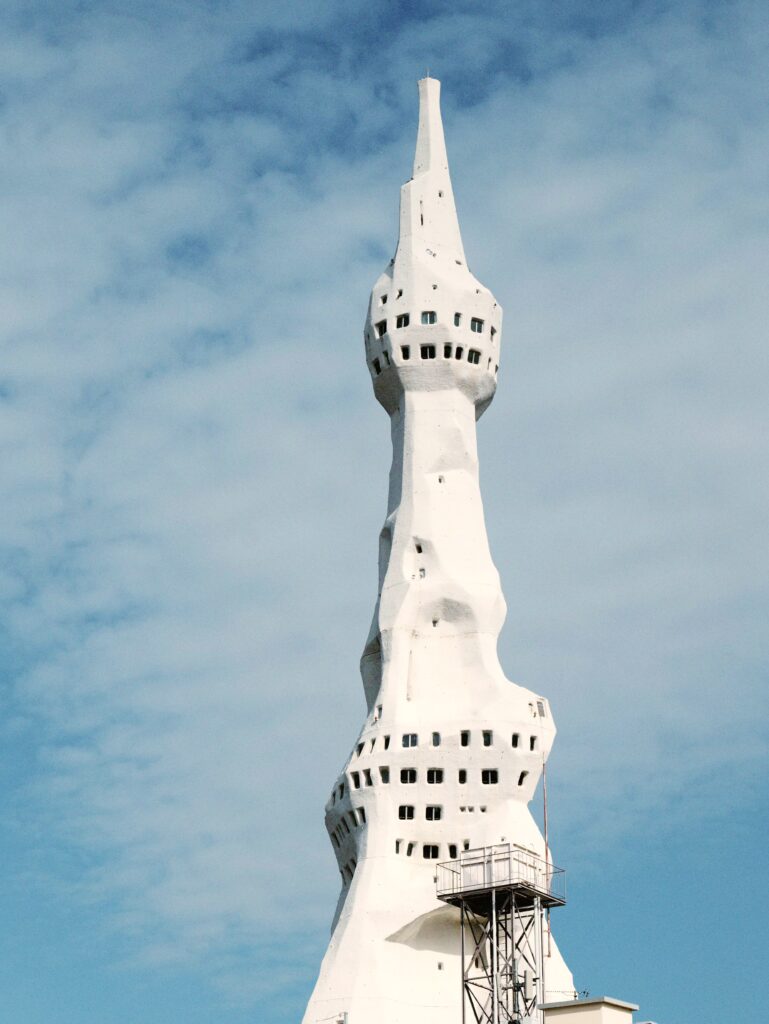
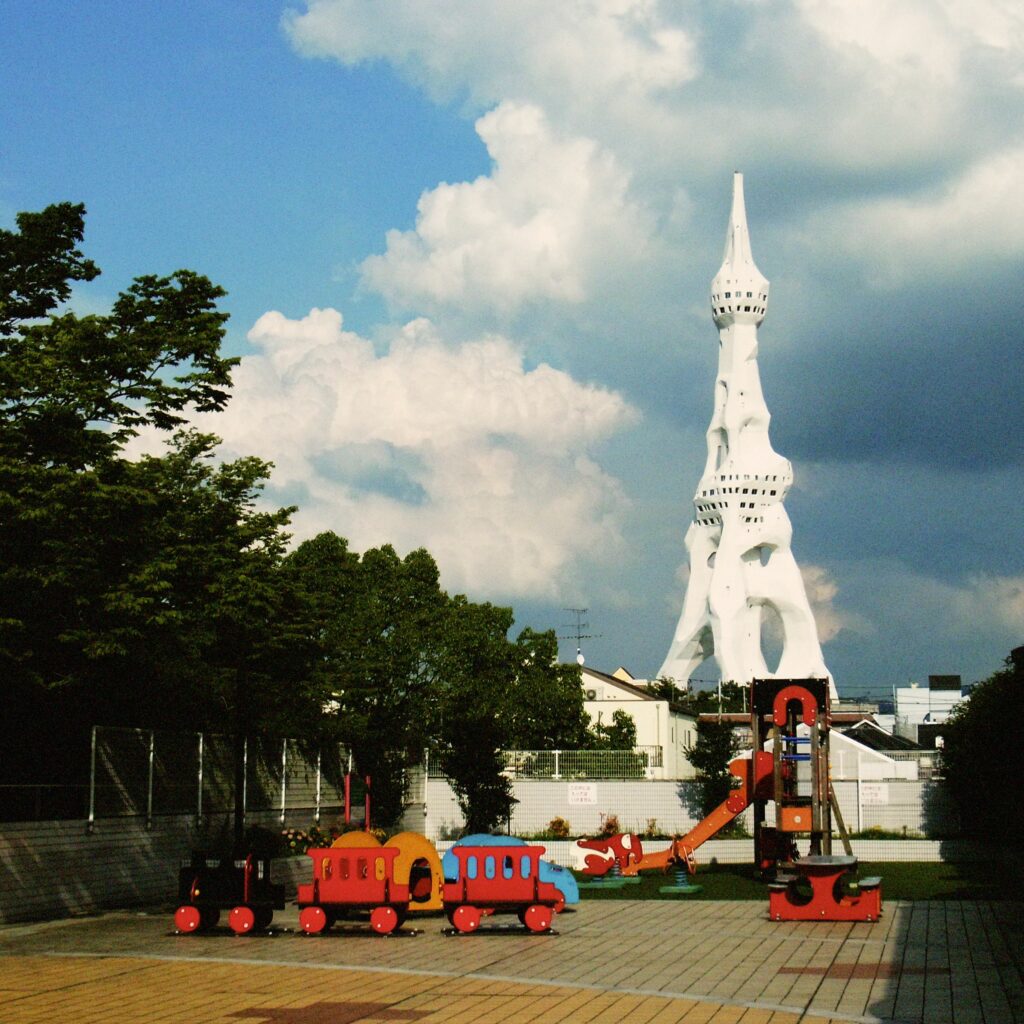
The full name is a mouthful, and the ambition of the men who built it lives in every syllable. The Great Cenotaph Tower for Peaceful Prayers to Console the War Dead of All Nations and Religions. In practice, everyone calls it the PL Peace Tower, or simply that weird tower the locals flock to for fireworks one night a year and leave ghost-quiet the other 364 days.
It shot up in 1970, after the groovy sixties had curdled into something darker, and it stands 180 meters tall, pale and windowless, on the grounds at Tondabayashi, south of Osaka. It is a cenotaph, a monument with no body inside, raised not to one army or one flag but to every human being killed in war since war began. Every conflict, every side. Inside, the names of the war dead are said to be recorded on microfilm and sealed in a golden container at the heart of the structure.
The design is compared to Gaudí, the Catalan architect from Barcelona, and you can see why if you look up his work. It was designed under the second patriarch of PL, Tokuchika Miki, and built by the Nikken Sekkei firm. It was meant to be terracotta, but in the end they used a mix of expanded clay and concrete, partly because it rides out earthquakes better. This is not steel and glass. It appears to have been molded by a giant’s hands, from papier-mâché like I once used to make a penguin from a Pepsi bottle in a second-grade art class, a penguin I remain quietly proud of. This is a religion that calls life art, after all.
Life Is Art
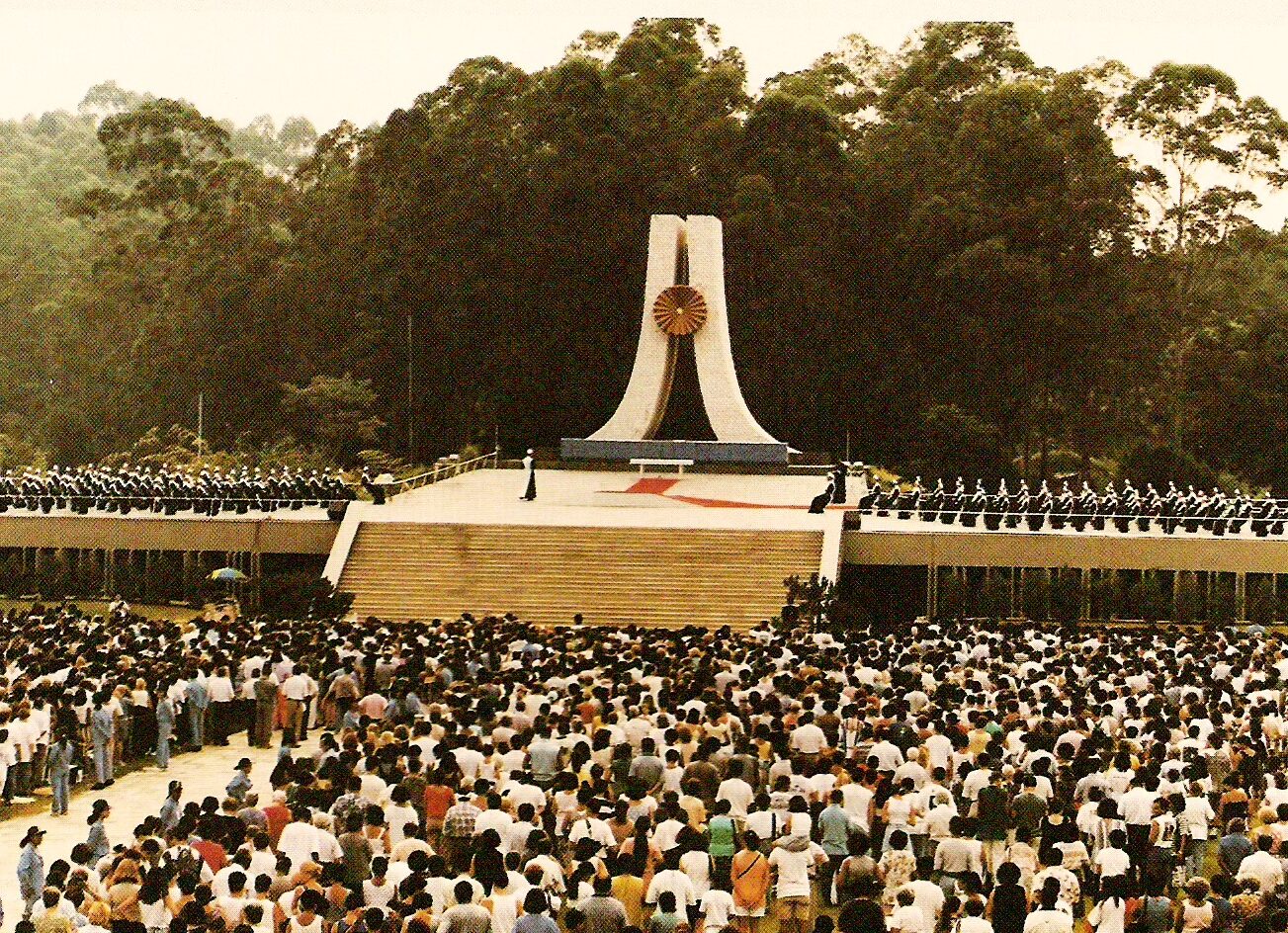
That is the creed, and they mean it. Life is art. Perfect Liberty teaches that every human being is born to express their individuality in everything they do, and that doing so sincerely and without letup is the essence of a good life. The 21 Precepts, handed down by TPL Kyodan in 1947, form the framework. The god at the center is Mioya Okami, the Great Parent, less a deity with a face than the whole universe treated as a single living thing. The government, unable to classify the religion under Shinto, Buddhism, or Christianity, lists it under “miscellaneous.”
This is not a religion of withdrawal, of shaving your head and staring at a wall. Office work, cooking, sports, a round of golf, all of it counts as worship so long as you do it as genuine self-expression. One of their old lines puts it better than I can: when work becomes worship, religion is truly lived. Try selling that to a salaryman on the last train home. The precepts themselves are startlingly, almost sweetly domestic. Do not complain about your food. Get up cheerfully in the morning. Live in harmony with your spouse. I read that last one out to my wife, pouch riding inside my lip, and she was unmoved.
Under all the cheer, heavier machinery sits. The spiritual head of the movement is the Oshieoya-sama, the Father of the Teachings, and his office does something genuinely strange. A believer in trouble can pray for their suffering to be passed up the chain to the patriarch, who bears it in their place, propped up by the collective prayers of everyone else. Healing and guidance flow back down through a divine light, and the word light runs throughout the movement. The liberty in Perfect Liberty turns out to mean liberty from hardship and hostility, not liberty in the loud American sense I once spent a lot of indoctrinated energy shouting about. Hardship itself is read as a message, a mishirase, a tap on the shoulder from the divine telling you that some part of your life has gone crooked.
Suppression, Prison, Resurrection
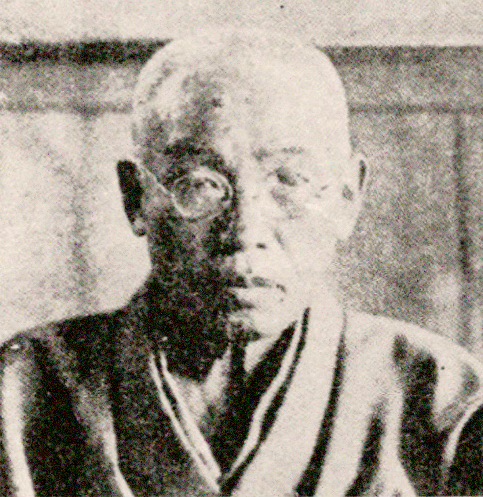
The lineage goes back much further than the shiny English name suggests. It begins with Tokumitsu-kyo, a small Shinto-flavored sect founded in 1912 by Osaka merchant Tokumitsu Kanada. One of his followers was Zen priest Tokuharu Miki, who, by his own account, was cured of a chronic illness by Kanada’s practice and promptly left Buddhism to follow the man who had healed him. Fair enough. In 1931, Miki renamed the whole thing Hito-no-Michi, the Way of Humankind, and grew it to about a million members before dying in 1938.
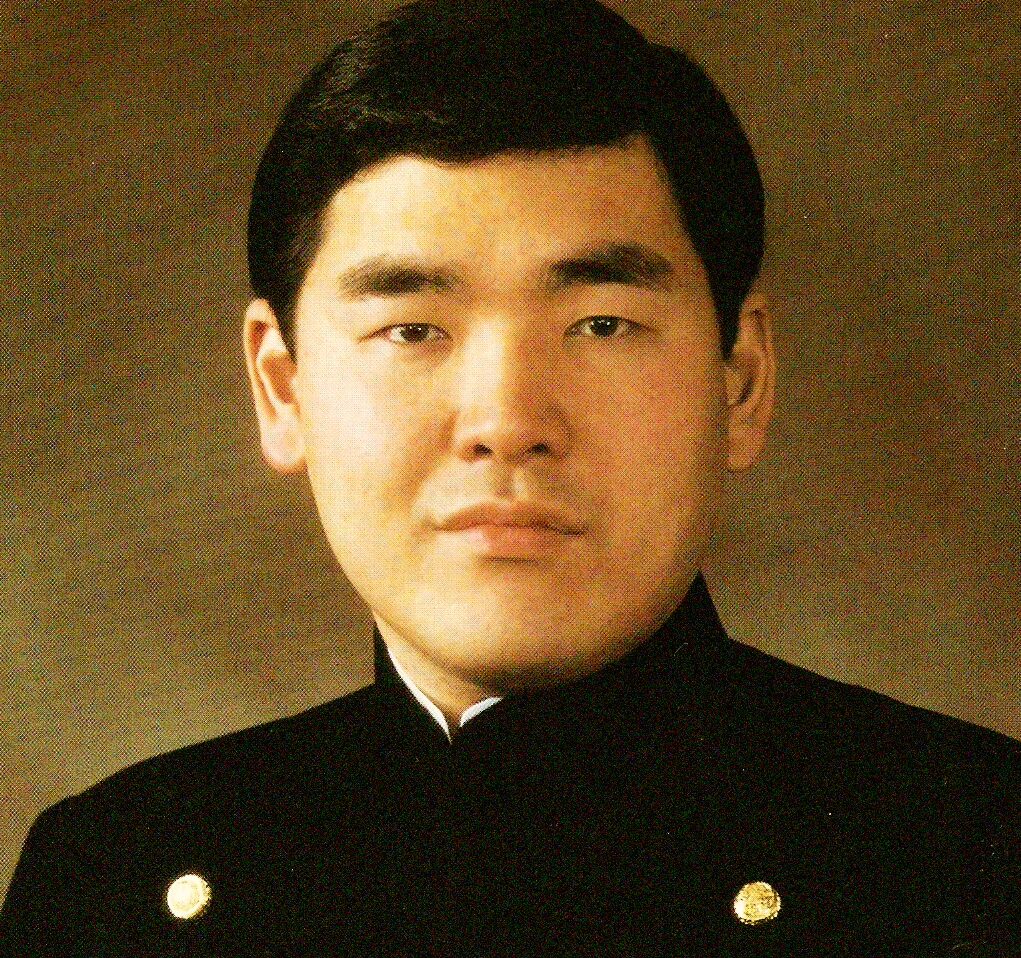
Then the state came knocking, not gently. Hito-no-Michi would not fall in behind the militarist government, and during the late 1930s crackdowns, it was dissolved and its leaders were hauled off. Tokuharu’s son, Tokuchika Miki, was jailed for lèse-majesté, which, in plain terms, means showing disrespect for the emperor and the state gods. He was released in 1946, into the rubble of a country that had just lost everything, and he rebuilt the movement from scratch under the new name Perfect Liberty Kyodan.
A religion crushed by one Japanese government waited out the war behind bars, reassembled under the next, and raised an 180-meter tower as its first great work to mourn the dead of every war ever fought, including its own persecutors. The men who poured that concrete had been on the receiving end of the wartime Japanese state, and they chose to grieve the whole of it at once, every side, no exceptions. That is either very sincere or very strange, and, given this is Japan, probably both.
The Word They Chose
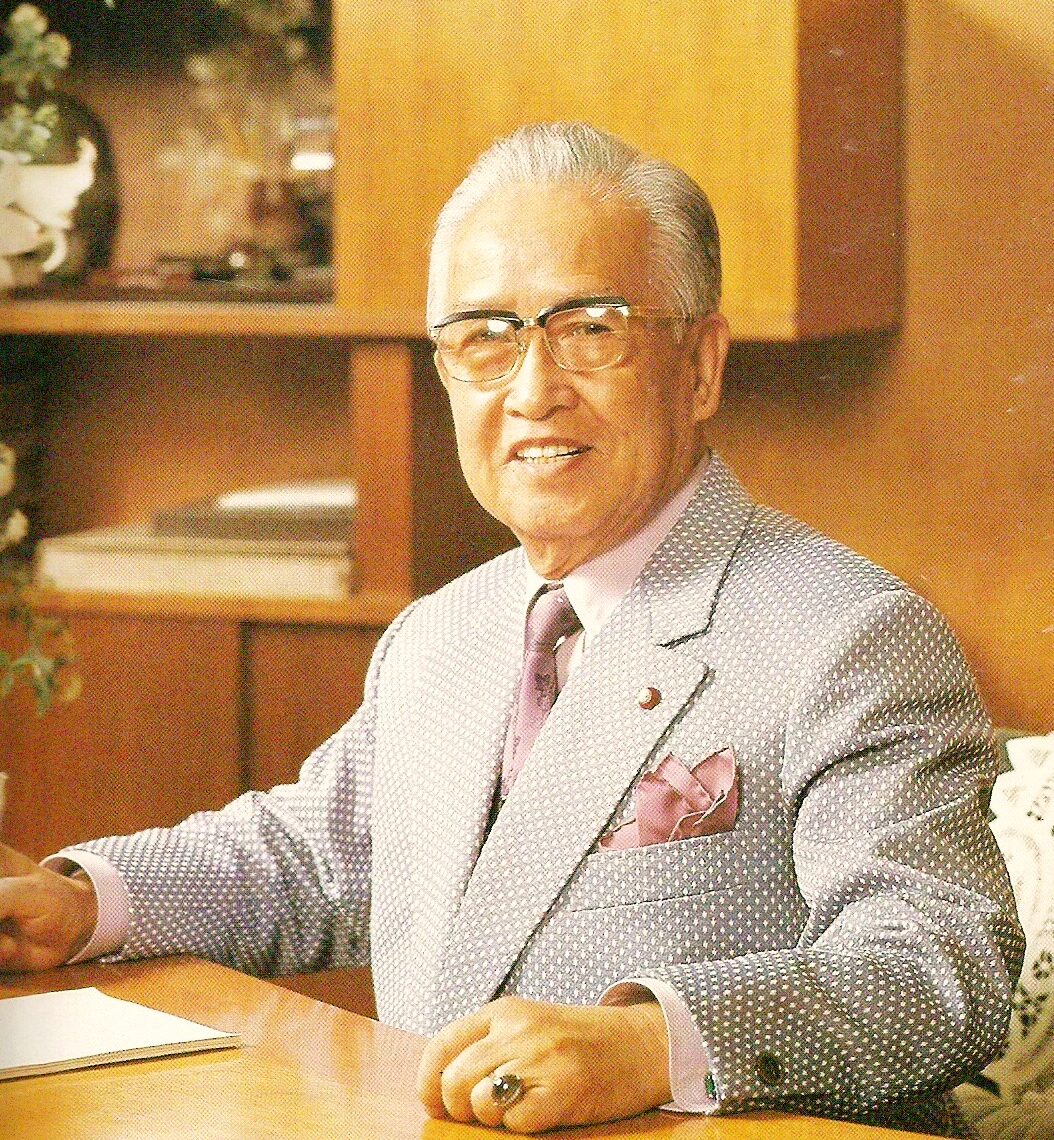
When Tokuchika Miki rebuilt the movement in 1946, he did not choose a Japanese name. He chose two English words. Perfect Liberty. A Japanese new religion, born of a Shinto mountain sect, sought a Western term at the precise moment the West was busy remaking the country.
And 1946 was not a neutral year to be born into. Japan had just lost a war and entered an occupation, and the occupiers held firm opinions about the Japanese soul. The Supreme Commander spoke openly about reconfiguring the defeated nation’s spirituality and set out to dismantle the state religious framework that had held the country together. Into the vacuum poured a flood of new faiths. Between 1946 and 1949, roughly 386 new religious organizations were registered in Japan. Perfect Liberty took its modern shape in that same narrow window, alongside names that would grow far louder later. A spiritual field had been plowed under, and a great deal of new growth sprouted quickly in the turned soil.
I spent years as a libertarian, unironically wearing the hat that read “taxation is theft” (cringe, I know), with the settled conviction that liberty was the plain foundation of every good thing. Years later, I emerged on the far side as an Orthodox Christian, and one of the things you surrender on that road is the innocence of the word. In the older esoteric tradition that runs beneath so much of Western symbol-making, liberty is not simply freedom from a king. It is freedom from heaven. It is the torch raised against the God who hands down the commandments, the light-bearer’s light, illumination offered in exchange for the refusal of divine authority. That is the theology embedded in the most famous statue in the harbor I grew up next to in New York, and I did not know it for thirty years. I cannot hear the phrase Perfect Liberty now without that second meaning arriving uninvited.
The men at Tondabayashi almost certainly did not mean it that way, and their homely precepts about not complaining over dinner argue against anything so grand. But the word carries a long shadow. They chose it in English in 1946, in a country whose spiritual ground was being turned over by people who flew that same word as a banner. The creed only sharpens that shadow. Perfect Liberty teaches that a person reaches their highest state by expressing their unique self, without end, until they become the artist of their own existence. A strand of Western occult thought describes the initiate’s goal in almost identical terms: the human being finishing himself, the self as the last and greatest work of art. Put the divine light at the center of the practice, and liberty and illumination stand side by side on a hill south of Osaka, stranger the longer you look.
The Patriarch Goes to Rome
Tokuchika Miki did not keep Perfect Liberty to himself. He chaired the Federation of New Religious Organizations of Japan for years, carried the movement across the Pacific, and, according to the church’s own history, traveled to the Vatican more than once, meeting Pope Paul VI and later Pope John Paul II to discuss world peace. It was exactly the interfaith gathering that Paul VI made his signature, with every creed gathered under one roof in common cause.
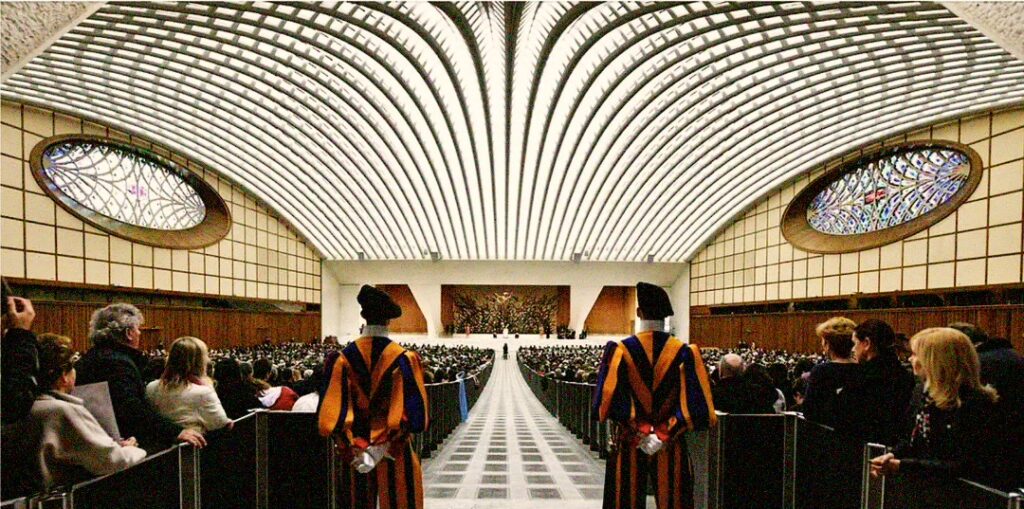
I have spent too long staring at one roof Paul VI left behind. He commissioned Pier Luigi Nervi, the great concrete engineer, to build a new audience hall on the edge of Vatican City, completed in 1971. Once you see it, it is hard to unsee. Two elliptical skylights sit like eyes. The roofline coils. The stage opens like a mouth, and the pope’s chair sits almost exactly where a serpent’s tongue would flick. Behind the throne rises Pericle Fazzini’s enormous bronze Christ, rising from what looks like a bomb crater. The official language calls it modernist abstraction. The older reading, the one I keep returning to, is that the most public stage in Western Christendom was poured in the shape of the thing that first spoke in the garden.
The word was liberty. The motif was light. And the man who built a religion on both carried them into a hall that many people, myself among them, cannot look at without seeing a serpent wearing a mask of light. The strangeness of Perfect Liberty does not stop at its own fence line. It kept a passport. The full argument belongs to a colder piece than this one, thick with names and networks that have no business in a story about a tower in Osaka. Now I digress. Back to your regularly scheduled programming.
A World Behind the Guard Post
The Tondabayashi headquarters is not a shrine in any sense I recognize. It is a self-contained world, walled off. Inside the boundary, you find a full general hospital, a junior high and a high school, a museum, villas for members, a children’s theater, and golf. So much golf. Perfect Liberty owns so many courses that Japanese people will tell you, only half joking, that it is the golf religion. A vast course wraps the grounds like a moat, and there are stories of PL churches elsewhere with driving ranges bolted onto the roof.
The entire site spans some ten million square meters across the Habikino hills, roughly the size of two hundred Tokyo Domes. A sign at the gate warns that non-members may not enter. When a magazine reporter turned up a few years ago, the spokesman told him only that the movement had been refusing all interviews for twenty, maybe thirty years, and had nothing to say.
Then there is the baseball. For decades, PL Gakuen, the movement’s own high school, was a name every Japanese sports fan knew by heart. It sent players like Masumi Kuwata and Kazuhiro Kiyohara to the pros and stood as a genuine powerhouse at the national tournament at Koshien, which is about as close as this country gets to a secular religion. The program was quietly shut down in 2016, blamed on bullying within the club, a lack of a coach, and the movement’s own thinning finances. It was not the only thing to go. The grounds once held an amusement park and a women’s college. The famous tea-ceremony and flower-arranging clubs are gone, too. A world that once kept adding things now mostly subtracts them.
Everyone who makes the trip out describes the same scene. Silence. A guard post. A long, empty plain of grass. The main hall, shut and solemn, at the far end. A children’s theater with no children. And almost nobody around, anywhere. On an ordinary weekday, the place feels less like the beating heart of a religion that once counted its members in the millions and more like a film set three days after the crew wrapped and drove home.
The Fireworks
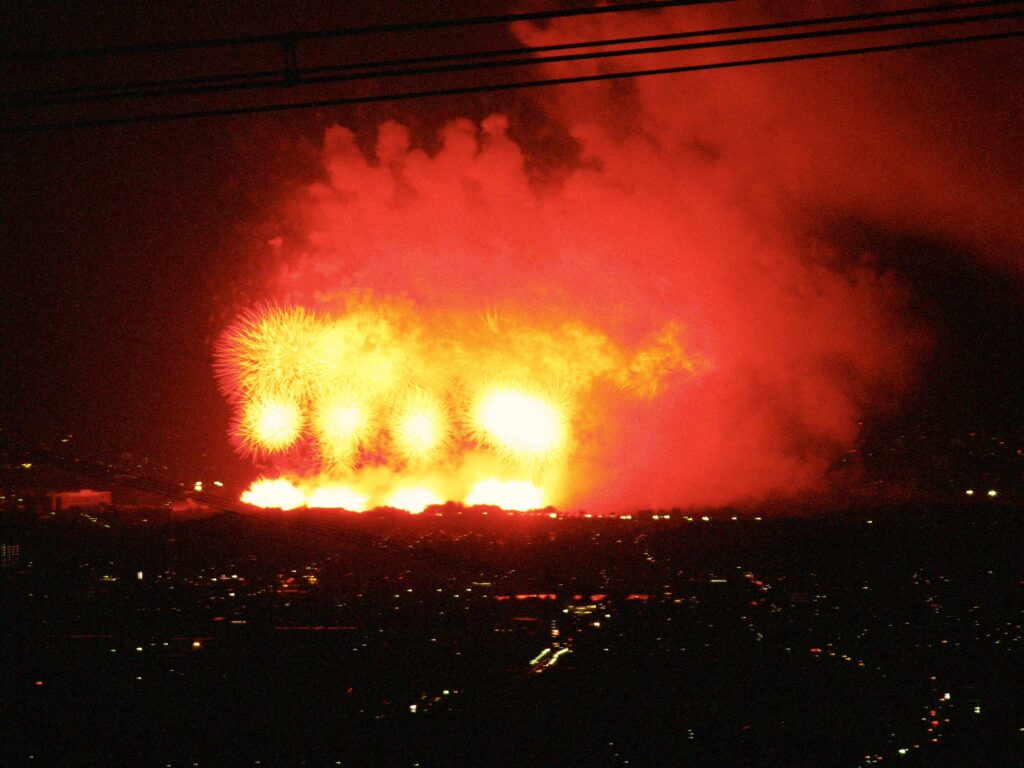
For most of a lifetime, once a year, the silence detonated. From 1953 to 2019, every August 1st, Perfect Liberty held the PL Art of Fireworks, staged on one of its own golf courses to mark the death of its founder. The old man had left instructions: when he died, no mourning, set off fireworks and celebrate. So they did, on a scale that beggared belief. A big municipal show might fire a few thousand shells. The PL show, at its height, sent up well over a hundred thousand, by some counts closer to two hundred thousand, one of the largest displays anywhere on earth, a solid wall of light and noise over the compound south of Osaka. People poured in from across Kansai to stand in a field and watch a so-called cult set the sky on fire in honor of a dead man who had asked for exactly this.
A religion called Liberty, born in the ashes of a defeated nation, marks its holiest night of the year with the single gesture Americans reserve for the Fourth of July. Fireworks are not a neutral way to celebrate. They are what the United States uses to mark its own liberty, the rockets’ red glare over Washington, over every small town with a park and a permit, an entire nation lighting up the night sky once a year to say we are free and we are still here. Perfect Liberty chose its own night for its own reasons, tied to its own founder, and I do not think anyone in Tondabayashi was thinking about July 4th when they set the date. But the symbol traveled anyway, just as the word did. Liberty, whatever language you say it in, keeps demanding fire in the sky to prove itself.
Then the pandemic came in 2020, and the fireworks stopped. They have not been held since. The number of shells had already been quietly declining for years before that, as had everything within the organization. For decades, this was the single night when the papier-mâché finger had an audience. Now it just points at an empty sky.
Pressure, and the Empty Seat
The past few years have not been kind to any of this. In July 2022, former prime minister Shinzo Abe was shot and killed by a man who blamed the Unification Church for wrecking his family. The national panic that followed did not stay neatly aimed at the Unification Church. It splashed onto every new religion in the country. New rules took effect in 2023, allowing donors or their relatives to claw back gifts a court deems beyond what is socially acceptable.
In February 2025, the Kochi District Court delivered a decisive ruling against Perfect Liberty. It sided with a second-generation member and ordered the return of 9.86 million yen in donations, with damages pushing the total toward 11 million. The court found she had been solicited while in a fragile state of mind and had given far more than she could afford. Read one way, it is overdue justice for someone who was taken advantage of. Read the other way, it is the Unification Church precedent rolling downhill onto a much older and much quieter outfit that never came close to earning the same headlines.
And there is an empty chair right at the center of it all. The third patriarch, Takahito Miki, died in December 2020, and the seat of the Oshieoya-sama, the Father of the Teachings, whose sole role was to absorb the faithful’s suffering, has remained vacant since. In his place, his widow, Michiyo Miki, runs the movement as acting patriarch, and many members cannot stand it. They accuse her of selling off temple land and buildings, dissolving the body that once let believers oversee the group’s assets, and being the hand behind the baseball team’s end. Some have taken the organization to court. Others have asked the tax authorities to scrutinize where the money goes. The suffering that seat was meant to absorb now has nowhere to go.
The numbers tell the rest. In the government’s own religious yearbook, Perfect Liberty reported about 1.8 million members in 1990. By 2012, that had fallen to roughly 940,000. By 2022, it was around 670,000, and scholars who watch these things suspect the real figure is even lower. At its height, the movement claimed close to three million, with lively communities in Brazil and elsewhere in the Americas that are holding up better than the home parishes. However you shake it, the Japanese side keeps thinning. The creed that made it interesting, this insistence that your whole life is a work of art, was never built to be sold door to door, and the tower now stands over a movement that gets a little smaller every year, smaller than the thing it was raised to hold.
Getting There
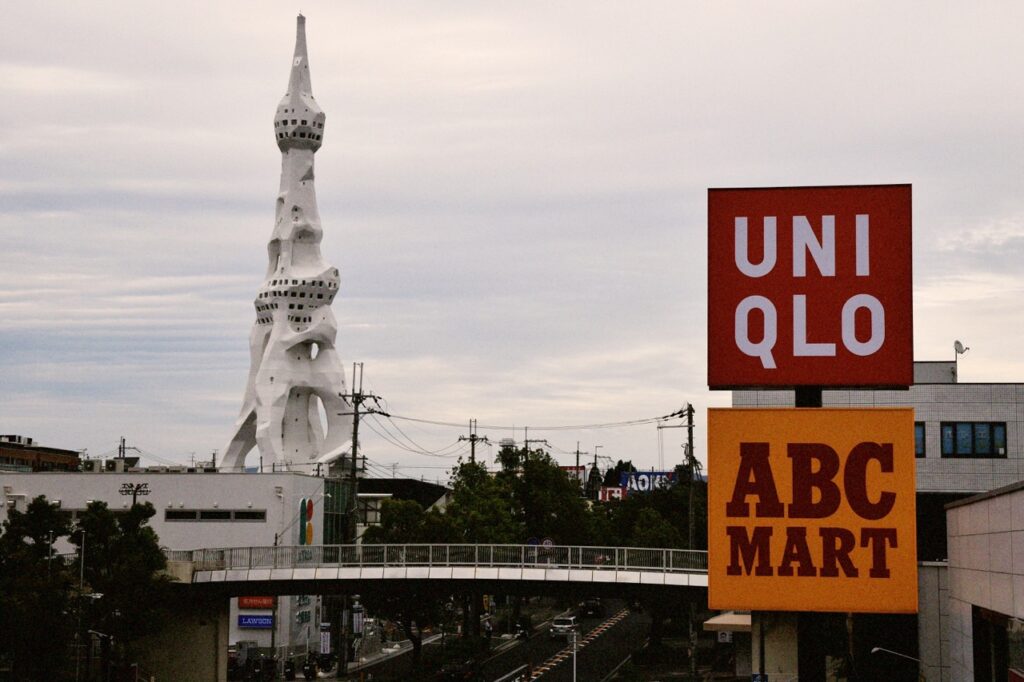
Take the Kintetsu Minami-Osaka Line from Tennoji in Osaka to Tondabayashi Station, then take a local bus toward the PL Hospital-South stop. The tower park sits across the road from the hospital and the moat-like golf course. There is a guard post at the campus proper, and the move, if you value your afternoon, is not to test it.
The tower itself is open to visitors most of the week. The old observation floor up top has been closed off, but the prayer hall on the ground floor is still open, and anyone is free to walk in. Go on a weekday. The grounds will be all but deserted. For an hour, the tower will be entirely, eerily yours, and you will learn more about the place in that one hour of nobody than you ever would on the single night everybody comes.
I went back and looked at the little overgrown church in Takamatsu one more time before I left the island. Still shut, still green, still mistaken for a police station. It occurred to me that a religion that teaches that everything you make is art has left, all over this country, a scatter of small, crumbling buildings where nobody makes anything anymore. And one enormous clay finger, pointing up, holding all the names, promising perfect liberty and a perfect light to a nation that had just been emptied out and told to start again. Go stand under it once and ponder its strangeness.