Most people who spend a day in Ueno Park do not know they are walking through the ruins of one of the most powerful religious complexes in Japanese history. They visit the zoo. They queue for the museums. They drink coffee at the Starbucks. They admire the cherry blossoms in spring, not knowing that the monk who planted those trees is buried a short walk away.
Kan’ei-ji is still there, at the northeast edge of the park, largely overlooked. What remains is a fraction of what once existed. The rest is the Tokyo National Museum, the zoo, and the park itself, repurposed, absorbed, and renamed. The temple was not demolished. It was scattered. And the pieces are still here if you know what you are looking at.
Built to Hold Off Demons
The temple was founded in 1625 by Tenkai, a Tendai Buddhist monk and one of the most influential religious figures in the Tokugawa court. Tenkai was Ieyasu’s spiritual advisor, a man who understood that the first shogun did not merely want to build a new capital but to fortify it by every means available, including the invisible ones.
The problem was geomantic. Edo Castle, which would become the center of Tokugawa power, faced the northeast, the kimon, the demon gate, the direction from which malevolent forces were believed to enter. This was not an abstract concern. The Imperial capital in Kyoto had long addressed the same vulnerability by placing Enryaku-ji Temple on Mount Hiei to its northeast, acting as a spiritual bulwark against whatever came from that direction. Ieyasu, as he built his new capital, wanted the same protection. Tenkai built it.
Kan’ei-ji was deliberately positioned at the northeast edge of Edo, in the hills of what is now Ueno. Its purpose was dual: a center of Tendai learning and a spiritual stronghold, a place where accumulated Buddhist practice would keep the demon gate closed. The temple quickly gained favor with the shogunate. Six Tokugawa shoguns, including Tsunayoshi and Yoshimune, are buried here in mausoleums that still stand, mostly closed to the public, behind the main hall.
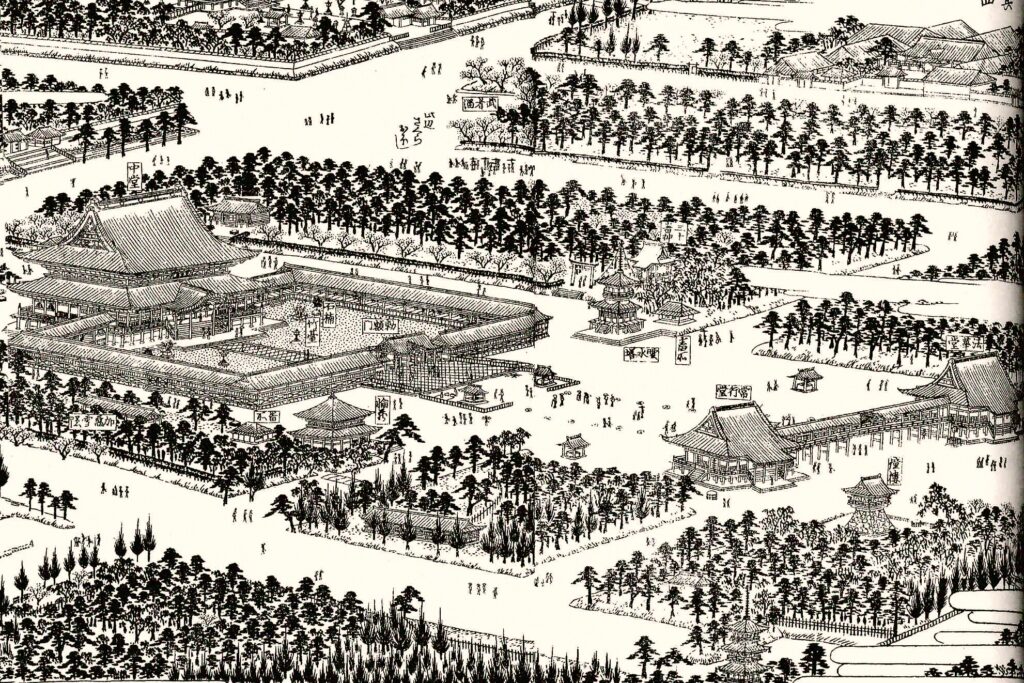
At its height, the complex covered 99 acres, essentially the entire park. It housed more than 30 sub-temples and 100 buildings. It served as the Kantō headquarters for Tendai Buddhism, rivaling the prestige of Enryaku-ji itself. The sakura trees Tenkai planted under Ieyasu’s direction still bloom every spring, turning the park into one of Tokyo’s most famous hanami spots. Most people celebrating under the blossoms have no idea who planted them or why.
July 4, 1868
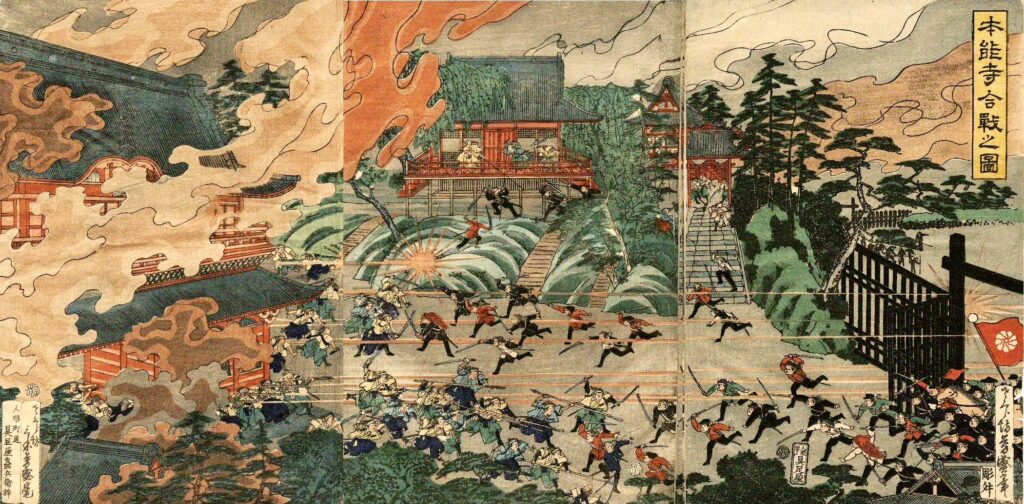
The battle that ended Kan’ei-ji lasted a single day.
By 1868, the Tokugawa Shogunate was collapsing. The final shogun, Yoshinobu, had surrendered Edo to imperial forces and confined himself to the temple grounds. The Shōgitai, a corps of Tokugawa loyalist samurai, approximately 2,000 strong, fortified themselves within Kan’ei-ji, refusing to accept the surrender and harassing imperial troops from within the temple walls.
On the morning of July 4, imperial forces attacked. Saigō Takamori’s Satsuma troops launched a frontal assault on the main gate and were driven back with heavy casualties. The Shōgitai, outnumbered but fighting from fortified positions, held the gate. The battle turned when Chōshū forces flanked the temple from the rear, breaking the stalemate. Tosa troops used Armstrong cannons and Snider rifles, modern weapons, against men defending a Buddhist temple with swords and determination. The Shōgitai was destroyed in roughly ten hours. The temple burned.
Over 80 of the Shōgitai’s dead were left unburied on the battlefield for a time, because they had fought on the wrong side. A monk named Bukki, from a nearby temple, eventually obtained permission from the new government to collect and cremate them. A monument to the fallen Shōgitai still stands in the park, placed in 1875. The inscription, composed by a former Tokugawa retainer, reads simply: The grave of the fallen in battle.
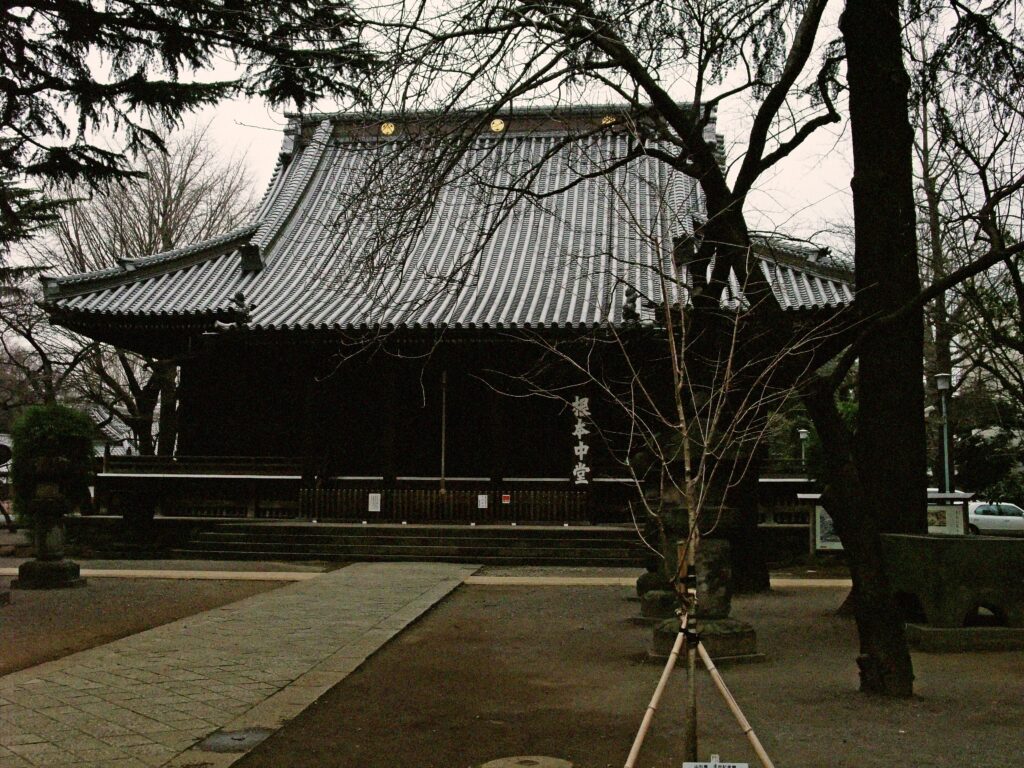
The Meiji government confiscated the temple grounds. Most of what survived was repurposed: the land became the park, the zoo, and the national museums. The main hall was dismantled, and its materials were stored. In 1879, what remained was used to rebuild a smaller version of the central hall, the Konpon Chūdō, on a reduced footprint. The giant temple had become a small one, assembled from its own ruins.
What Remains
Walking the park with this history in mind changes the experience of it considerably.
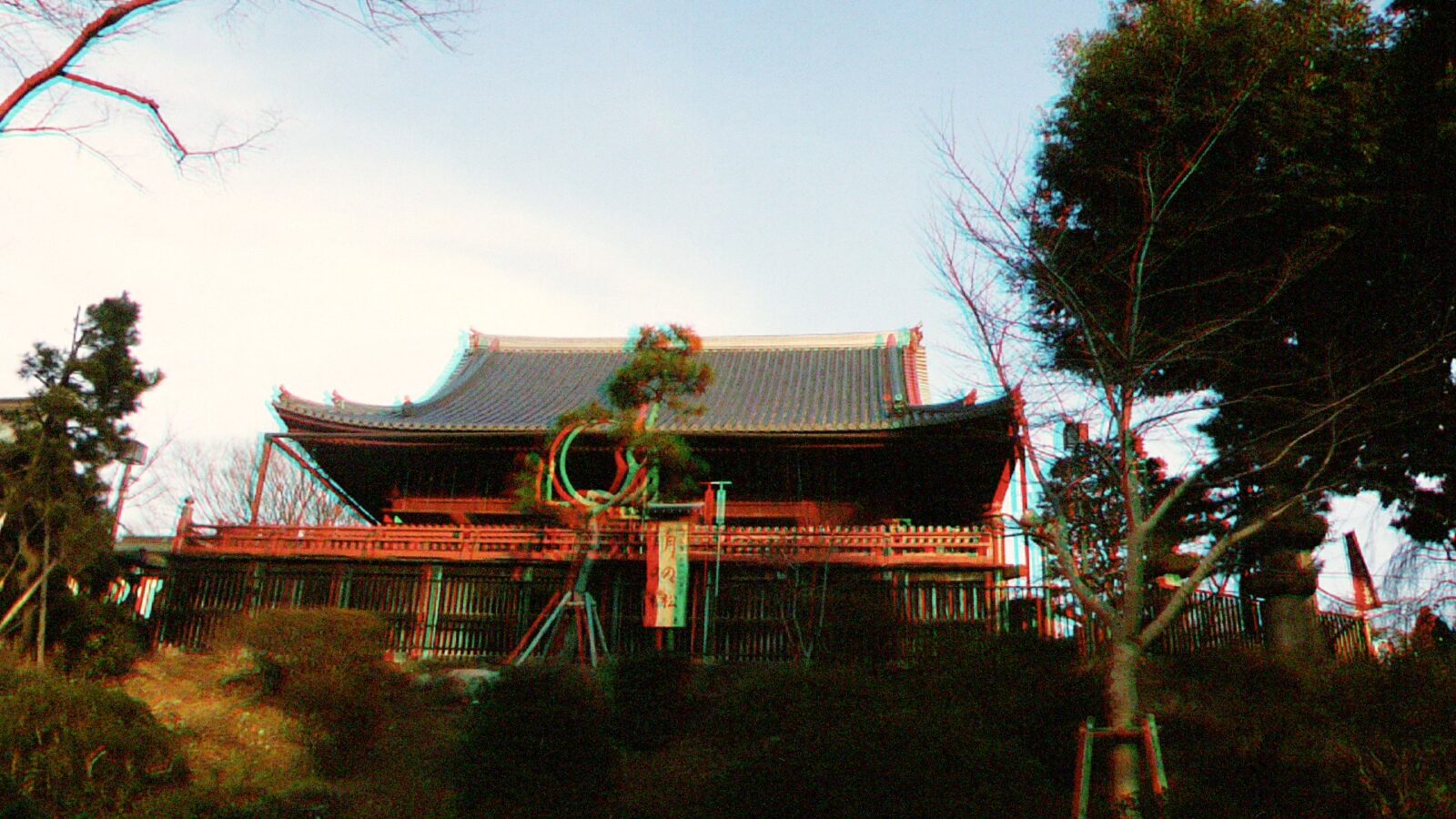
The Konpon Chūdō still stands, quiet and slightly incongruous at the edge of the park’s busy northeast corner. Inside, a woman sells amulets in an incense-filled hall lined with Kannon statues. On the day I visited, a weekday in summer, the only other people were a lone day laborer ringing the prayer bell outside and a few housewives sheltering from the heat under umbrellas. The soft sound of pebbles underfoot. Cicadas hit a crescendo all at once, then settle. The occasional low hum of a passing car on the road beyond the trees. A kindergarten is connected to the grounds, and children’s voices are audible from somewhere behind the main hall.
Behind that hall, through a fence not meant to deter, the shogun mausoleums sit in a small enclosure closed to the public. The graves of six of the men who governed Japan for two and a half centuries. Accessible to no one. Tokyo moves in every direction around them.
The five-story pagoda still stands in the park, now technically within the grounds of Ueno Zoo, visible from outside. The fractured head of the Great Buddha of Ueno, damaged in the 1923 Kanto Earthquake and never rebuilt, is displayed near the park entrance. A stone monument honors the hair of a high priest. A spiritual boulder is dedicated to the souls of insects. Red-capped Jizō statues stand in rows, guardians of children in the Buddhist afterlife, watching the park’s visitors with expressions worn smooth by the weather.
The Register of This Place
Kan’ei-ji doesn’t fit neatly into the haunted or cursed register of the other places on this site. What it offers is a different kind of uncanny: the uncanny of scale, of loss, of a thing so enormous that its destruction could only be partially completed, and what remained was absorbed rather than erased.
Ueno Park is one of the most visited public spaces in Japan. The people walking through it are, without knowing it, walking through a battlefield, through a graveyard, through the footprint of a temple that once held the northeast gate against demons. The park is pleasant, the coffee is good, and the pandas are charming. None of this is incompatible with what is underneath it.
The Tendai sect believed that Kan’ei-ji would endure as long as the Tokugawa Shogunate did, that the temple and the regime were spiritually bound. When the Shōgitai made their last stand here, they were not simply defending a military position. They were defending the demon gate. The gate fell. The shogunate fell. The park was built.
Getting There
Konpon Chūdō is at the northeast end of Ueno Park, a short walk from the Tokyo National Museum. It is signposted within the park but easy to miss if you are not looking for it. The Shōgitai monument is nearby. The five-story pagoda is visible from the zoo perimeter on the park’s western edge.
Go on a weekday. The park empties considerably, and the temple becomes what it was meant to be: a place for standing still inside something very large.
Related: Harakiri Yagura — The Cave Where a Shogunate Died / Yotsuya Kaidan — Japan’s Most Famous Ghost Story