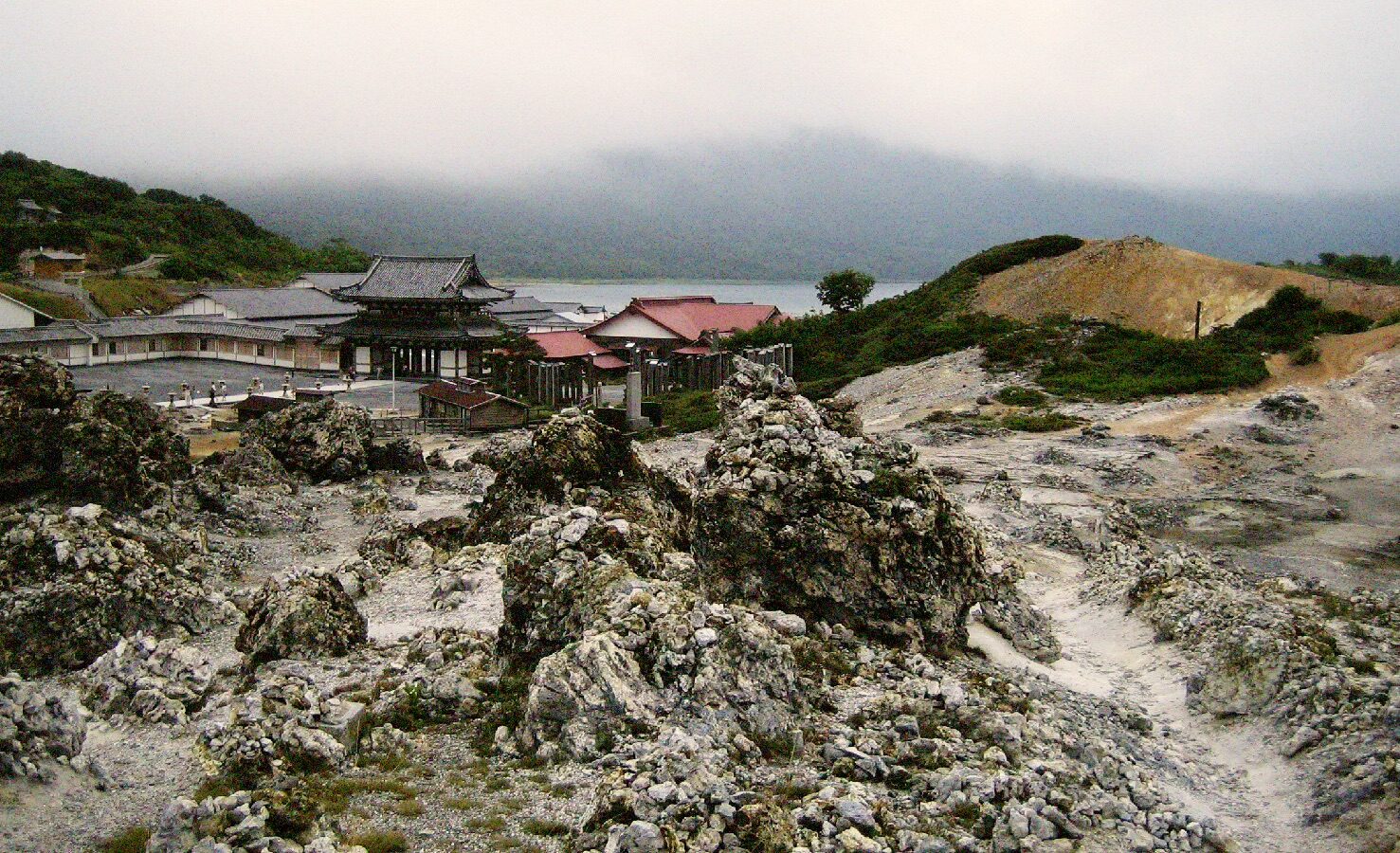
The smell arrives before anything else. Sulfur, heavy and unmistakable, carried on a wind that cuts across a landscape with almost nothing left standing. No trees. No grass. Gray volcanic rock, white mineral deposits, and steam rising from vents in the earth. The ground itself seems to be exhaling.
This is Mount Osore, Osorezan, in Aomori Prefecture, at the far northern end of Honshu. One of Japan’s three most sacred sites. A place where, according to folk belief held here for over a thousand years, the dead gather after death. The closest thing to a physical hell, or the gate before it, that Japanese geography offers. Perhaps Dante would recognize the approach: the sulfurous air, the barren ground, and the sense of arriving at the threshold of something that does not belong to the living world.
The Place
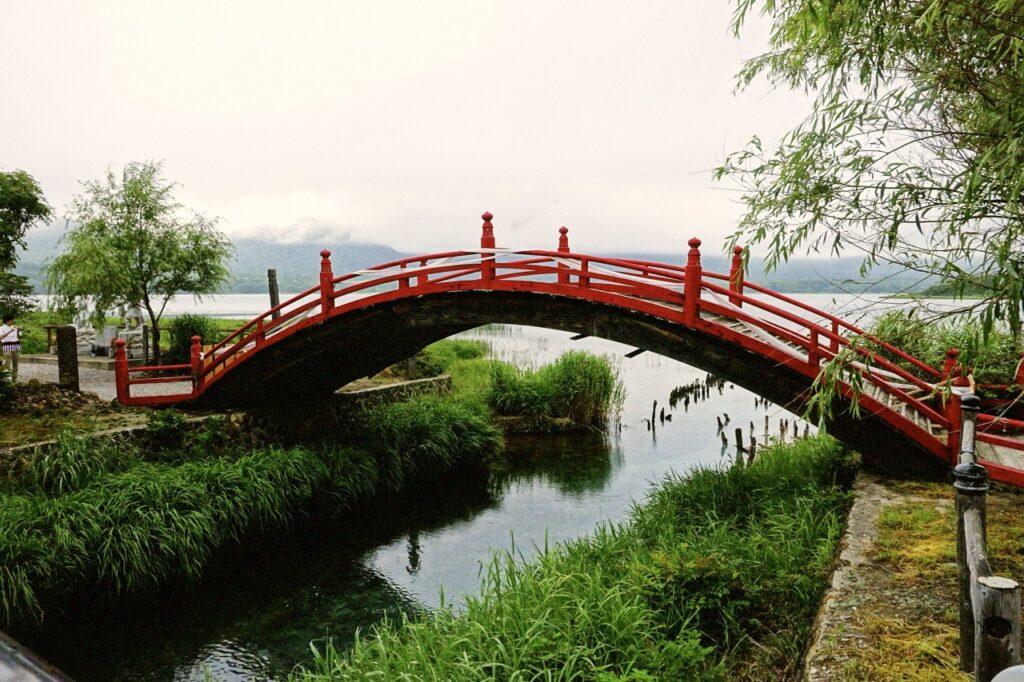
Mount Osore sits on the Shimokita Peninsula, a remote finger of land jutting into the sea at the northernmost point of Japan’s mainland. The journey here is deliberate, through countryside that thins as you go until the infrastructure of ordinary life has mostly fallen away. This is not a place you pass through on the way to somewhere else. You come here because you mean to.
The site centers on Lake Usoriyama, a caldera lake formed by volcanic activity. The lake’s shore is called Gokuraku-hama, Paradise Beach, and its striking blue-green color deliberately contrasts with the sulfurous wasteland surrounding it. The contrast is the point. Hell and paradise, adjacent. The theology is spatial.
Surrounded by eight mountains, the volcanic landscape has a uniquely otherworldly atmosphere. Once you pass the rocky area, the scenery changes dramatically.
The site was founded in 862 AD by Jikaku Daishi Ennin, a senior priest of the Tendai sect, one of the oldest schools of Japanese Buddhism, introduced from China in the 9th century and based on the conviction that all living beings have the potential for enlightenment. Ennin came here after a dream instructed him to travel east for more than thirty days to find a sacred mountain. He walked until he arrived at this mountain. Most records from before the Edo period were lost to wars and fires, but the tradition of his arrival endures.
The main temple is Entsuji, managed by the Soto Zen sect, which centers its practice on seated meditation and the gradual cultivation of awareness in daily life. The principal deity is Enmei Jizo Bodhisattva. In Buddhist understanding, a bodhisattva is an enlightened being who remains in the world to relieve others’ suffering rather than withdrawing into final release. Enmei Jizo is most associated with children, the deceased, and those caught in transitions between one condition and another.
Also enshrined here are Shakyamuni Buddha, the historical founder of Buddhism; Amida Buddha, the Buddha of Infinite Light who presides over the Pure Land, where the departed are believed to dwell; Yakushi Buddha, the Buddha of Healing; Kannon Bodhisattva, the embodiment of compassion; and Fudo Myo-o, the wrathful protector whose sword cuts through delusion. The faith at Mount Osore draws on the full range of Buddhist tradition without confining itself to any single doctrine.
Jizo and the Dead Children
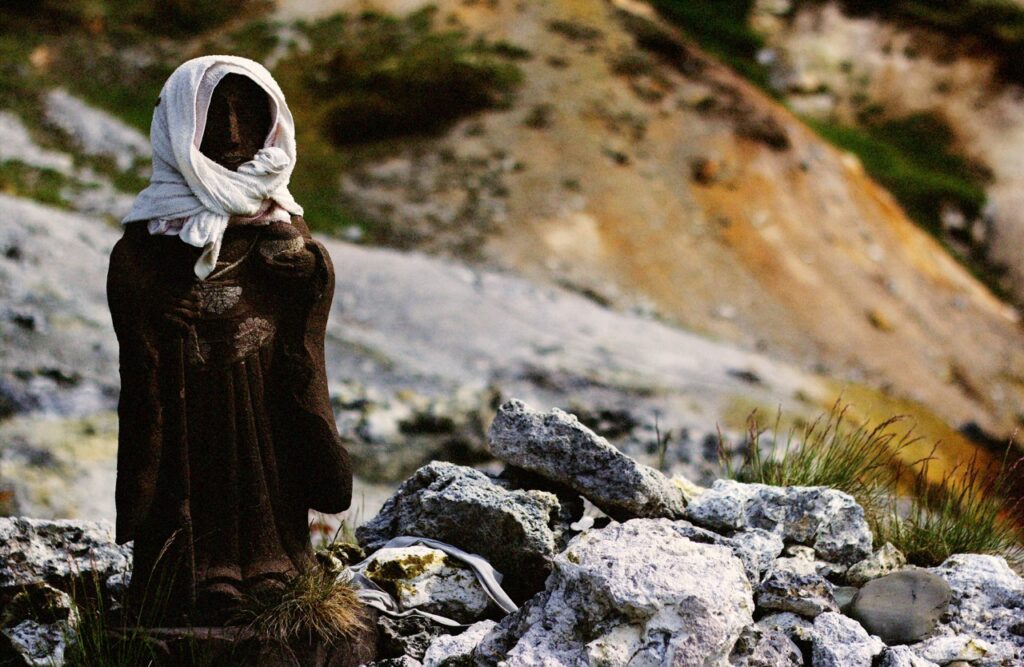
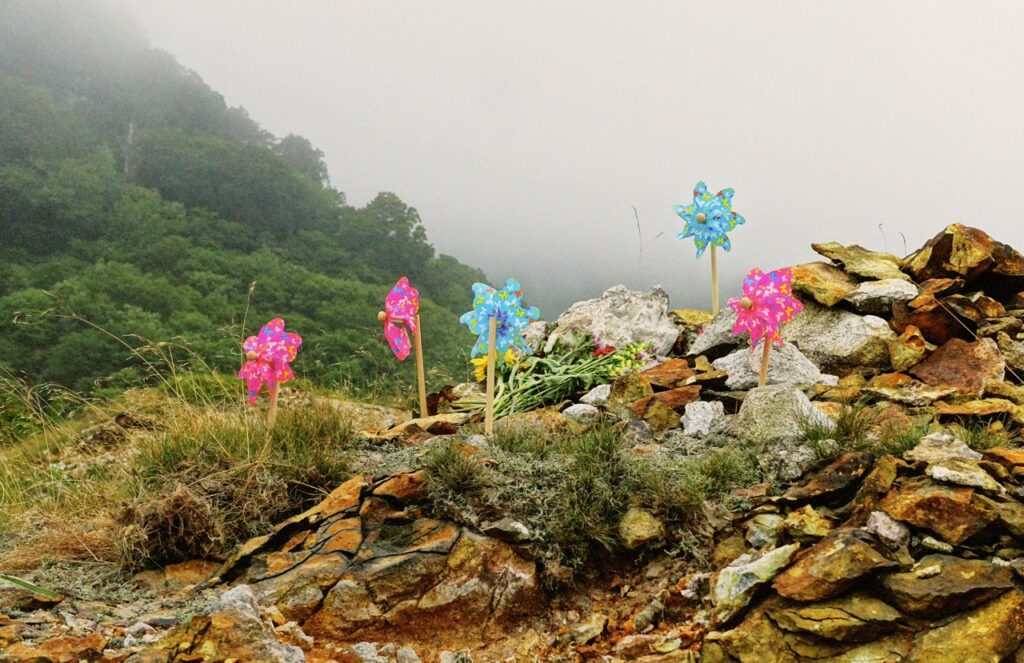
As you approach the inner landscape, the Jizo statues come into view. Multiple figures, often red-bibbed, are arranged across the volcanic ground, guardians of children in the afterlife, according to Buddhist belief. Parents who have lost children come here. They dress the statues in bibs and small clothing and leave toys and offerings. These gestures accumulate over years and decades.
The combination of the setting and the purpose, a barren hellscape covered with small figures dressed by grieving parents, is not easily forgotten. You do not need to believe in any particular theology to feel what this place does.
There is a spring on the temple grounds called Hiyafusu. It is said that drinking one cup will make you ten years younger, two cups will make you fifty years younger, and three cups will keep you young until you die. According to the official site, it also quenches travelers’ thirst. Both claims may be true, depending on whom you ask.
The Itako
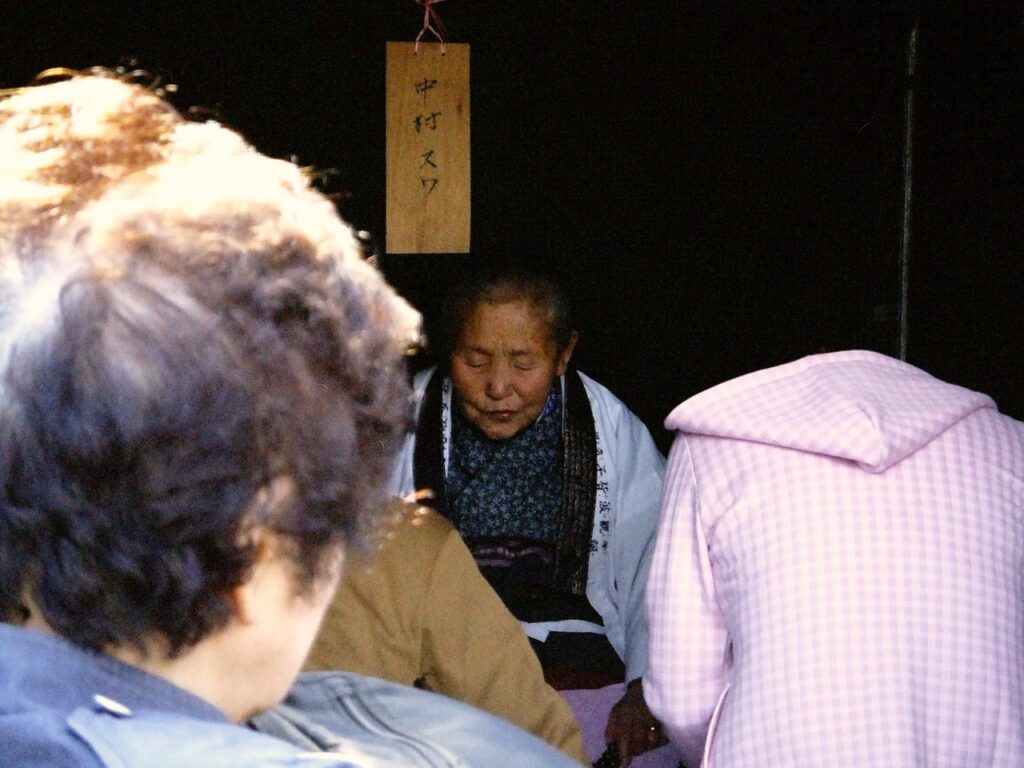
Mount Osore is one of the few places in Japan where itako still practice openly.
Itako are female spirit mediums from the northern Tohoku region, shamanic practitioners who perform kuchiyose, the ritual summoning of the dead to speak through a living intermediary. Many are blind, or were blind from childhood or youth, which, in the folk understanding of their tradition, fits the image of those who navigate by senses other than sight. Training is rigorous and takes years. At its conclusion, the itako is believed capable of summoning specific souls and enabling families to speak with those they have lost.
At its peak, more than thirty itako gathered at Mount Osore. Now only a few remain. They appear primarily during the Osorezan Grand Festival in late July and the Osorezan Autumn Pilgrimage in late October. Outside these festival periods, they do not typically practice at the site.
Many people flock to the summer festival specifically to seek the itako. The wait can be long. The experience, by all accounts, is not casual.
The Warning
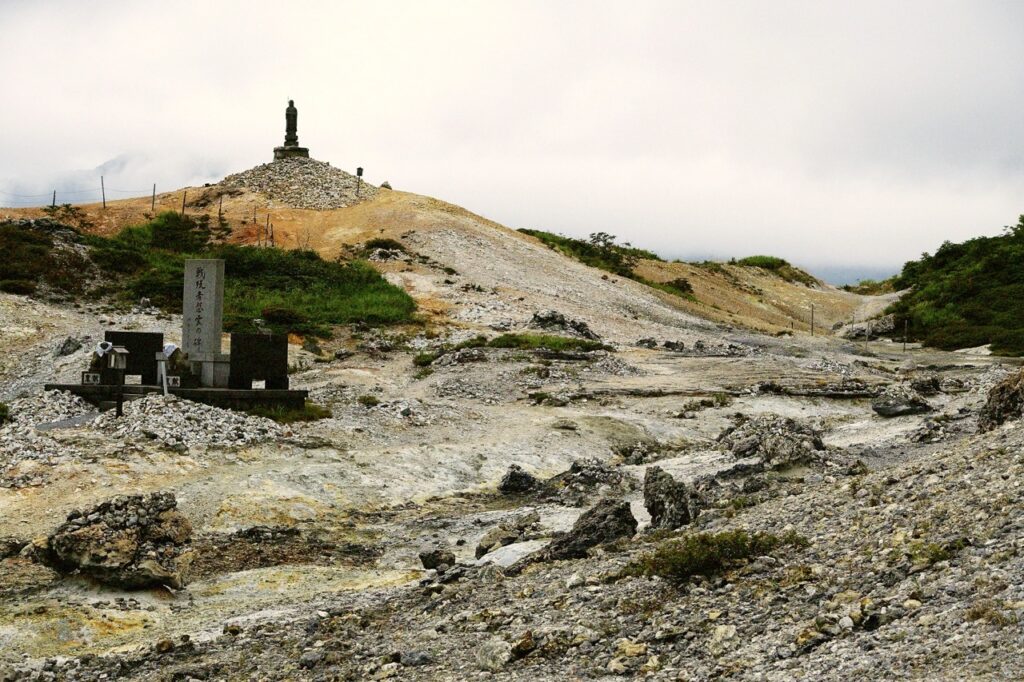
Among those familiar with this place, whispers carry a specific warning: do not go to Osorezan if you are susceptible to spiritual phenomena or if your grip on the everyday is not firm. This is not superstition staged for tourists. It is a genuine warning passed among people who take the site seriously.
By its nature and centuries of accumulated belief, the place is a focal point for the weight of grief, the memory of the dead, and forces the living are not always equipped to face. Overnight lodging exists at the temple for those who wish to stay. I am not pushing you toward it.
There are places that hold things. This is one of them. Come in the day if you must. Come knowing what the ground has absorbed.
Getting There
Shimokita Station on the JR Ōminato Line is the access point. From there, it is about 45 minutes by bus or 30 minutes by car to the mountain. The site is open from May through October. The road closes from mid-November through mid-April.
Entrance fee: 500 yen
Related: Walking the Demon Gate/ Enryakuji Temple, Mount Hiei — The Mother Mountain of Japanese Buddhism