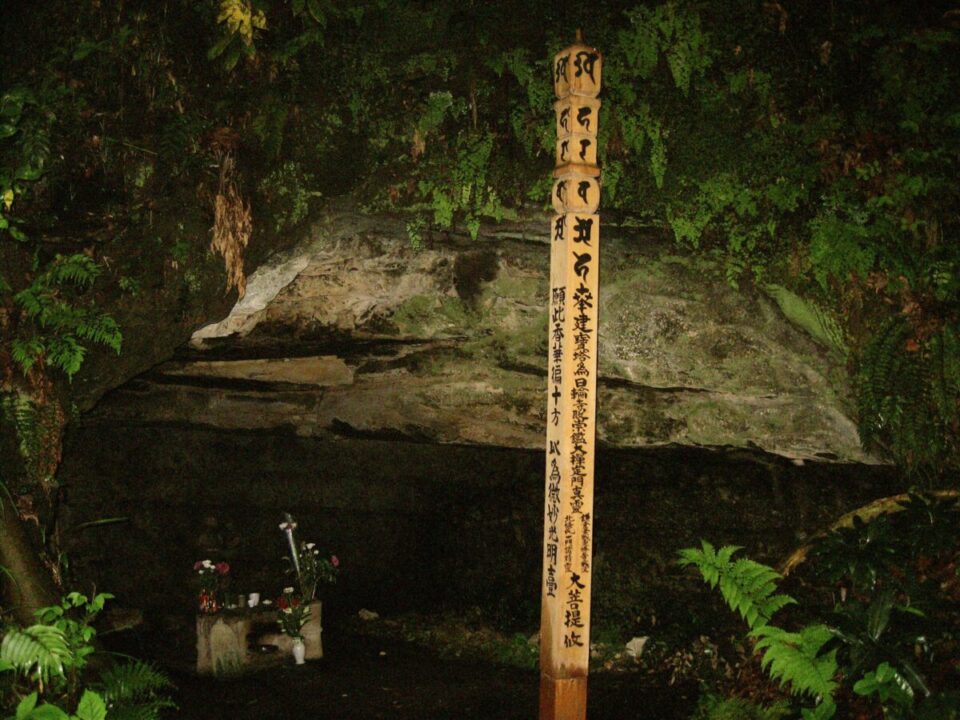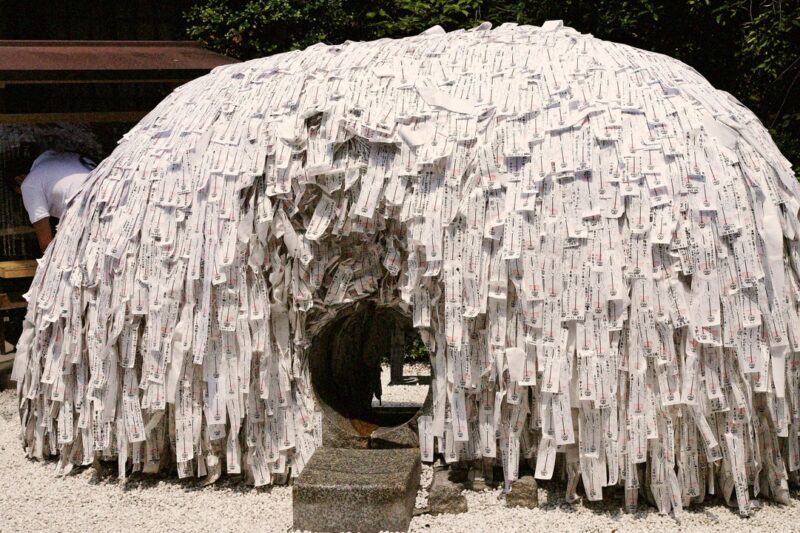
There is a shrine in central Tokyo that enshrines one of Japan’s three great vengeful spirits, a rebel who declared himself emperor, was beheaded for it, and whose severed head then flew across the country under its own power before landing in the district where his enemies lived.
He is still here. A ten-minute walk from his shrine, his head is buried in the middle of Tokyo’s financial district, surrounded by the headquarters of Japan’s largest banks and corporations. The Finance Minister who disturbed his grave in 1926 died suddenly. Fourteen of his colleagues followed. The American military tried to bulldoze the site in 1945, and a construction worker was killed when the bulldozer overturned. The project was abandoned.
This is Kanda Myōjin, known to locals as Myōjin-sama, the guardian deity of Kanda, Nihonbashi, Akihabara, and Otemachi.
The Founding and the Deity Who Caused Problems
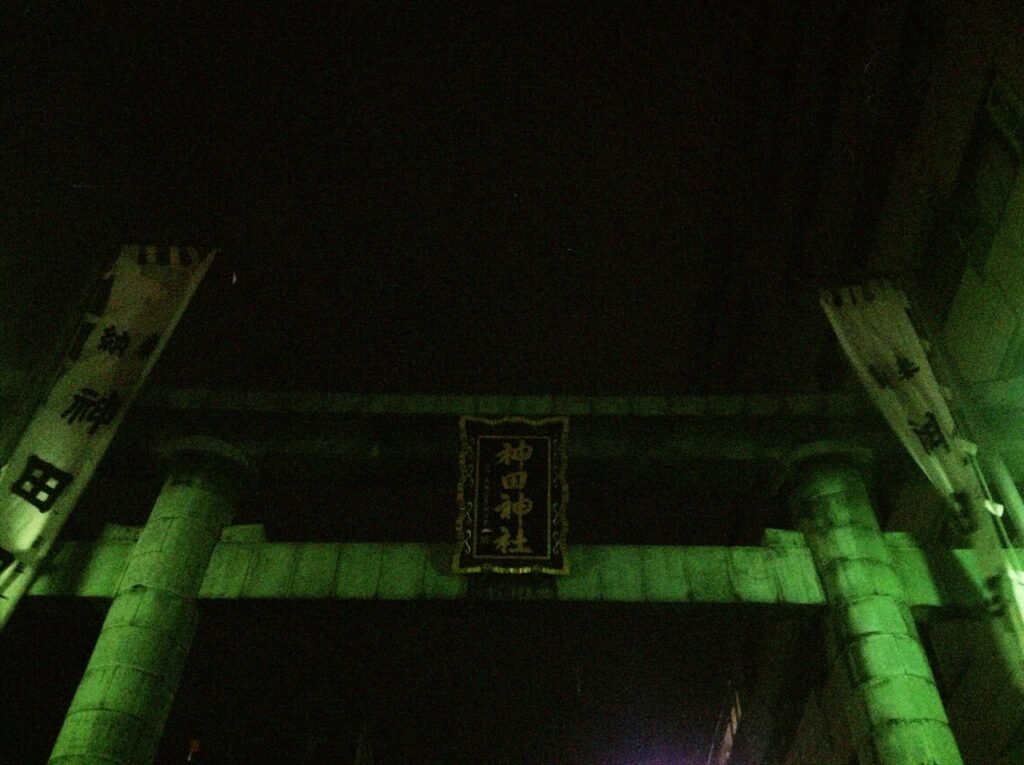
The shrine was established in 730 by Makandaomi, a descendant of the hereditary Izumo priestly line, at the edge of early settlement in what would become Edo. The principal deity enshrined was Daikokuten, one of the Seven Lucky Gods, patron of fortune, matrimony, and harvest, and guardian of the underworld where ancestral souls reside. A paradoxical figure: a lucky god who was also blamed for calamities. Natural disasters struck the area repeatedly in the centuries after the founding, and Daikokuten absorbed the blame.
In 1309, a wandering monk of the Jishū school, Shinkyo Shonin, arrived and performed rites to pacify the deity. The calamities eased. The shrine’s reputation for efficacious prayer began to spread.
The Battle of Sekigahara and the Festival That Never Ended
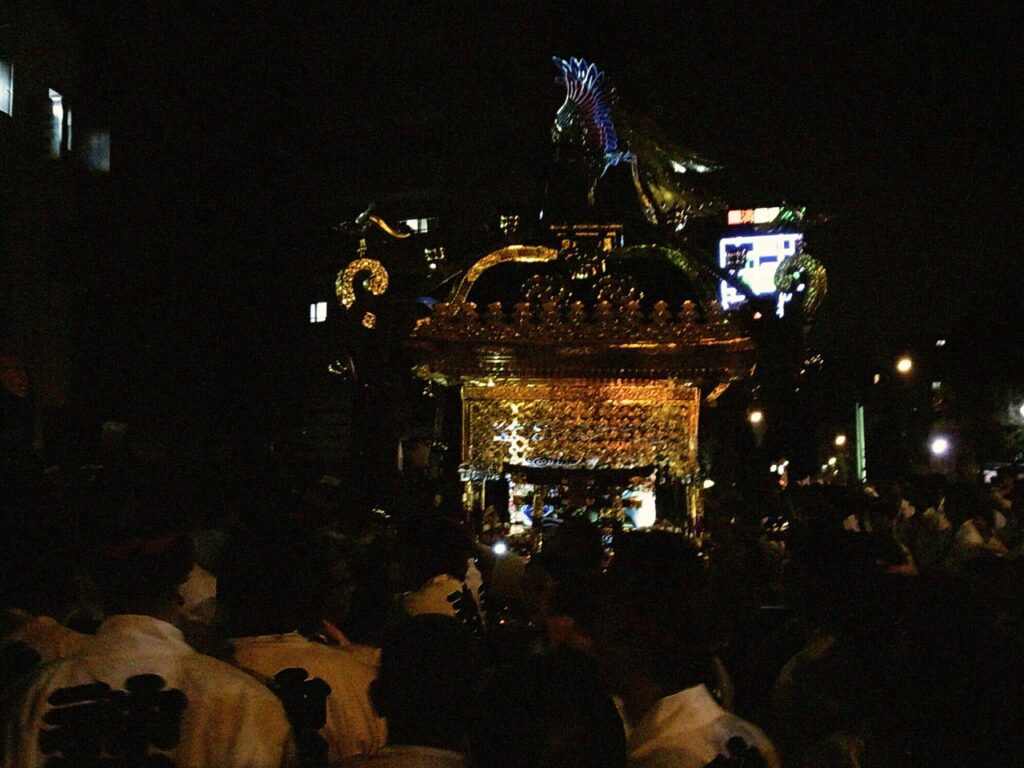
Shrines that become associated with military victory during Japan’s civil war period tended to acquire lasting significance, and Kanda Myōjin is the most prominent example.
Tokugawa Ieyasu prayed here before the Battle of Sekigahara in 1600, the battle that ended a century of civil war and established the Tokugawa Shogunate. When victory came, Ieyasu, a profoundly religious man, declared September 15th a day to be permanently observed. From that declaration came the Kanda Matsuri, one of Tokyo’s three great Shinto festivals, held every odd-numbered year in May, when hundreds of portable shrines process through the neighborhoods the shrine protects.
The shrine was moved to its current location in 1616, positioned at the kimon, the demon gate in the northeast of Edo Castle. The same logic that placed Kan’ei-ji Temple and Enryaku-ji before it: put the spiritual bulwark between the capital and whatever comes from that direction. For 250 years of Tokugawa rule, both samurai and citizens regarded Kanda Myōjin as the main line of Edo’s unseen defense.
Taira no Masakado: The Deity Who Should Not Be Here
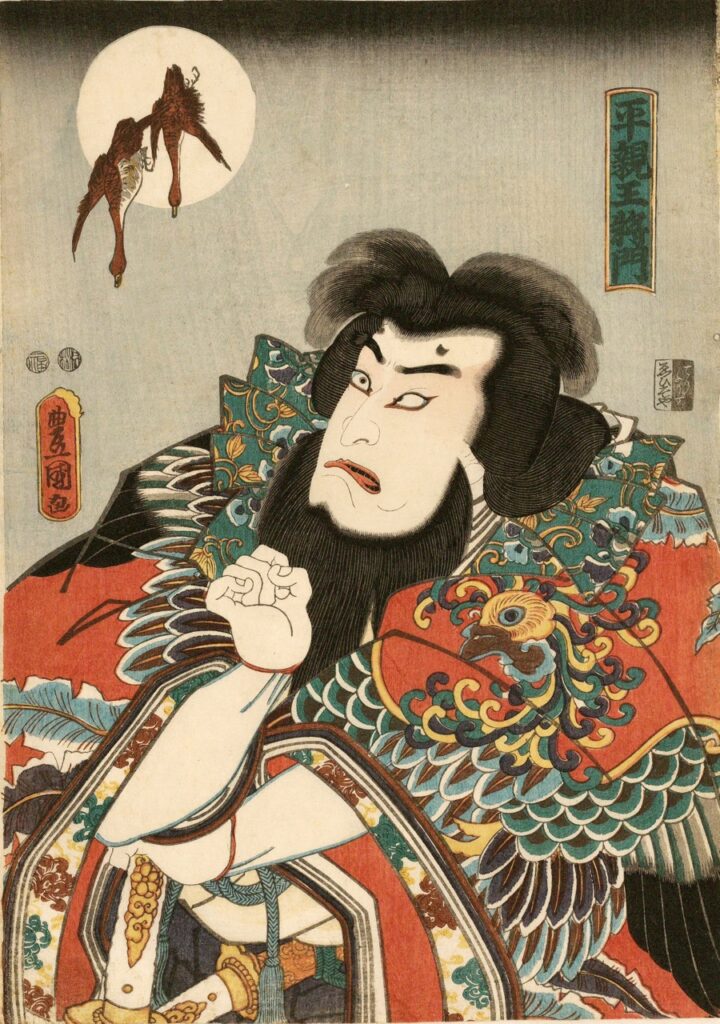
In 940 CE, Taira no Masakado, a samurai of the Taira clan and a descendant of Emperor Kanmu, was beheaded after declaring himself the new emperor of eight provinces in eastern Japan. His rebellion had lasted two years. He had been politically maneuvered, ambushed, betrayed, and finally killed in battle. His head was sent to Kyoto and publicly displayed as a warning.
The head did not behave as expected.
It refused to decompose. Three months after death, it still looked fresh and alive, the eyes fiercer than before, the mouth twisted. Night after night, it called out: “Where is my body? Come here, fight me again!” Then one night it began to glow. It lifted from its display and flew east across the country toward Masakado’s homeland. Exhausted somewhere over what would become Tokyo, it fell into a fishing village called Shibazaki, landing in the area now known as Otemachi. The villagers found it, washed it, and buried it in a mound.
The mound is still there. We will come to that.
In 1309, the same year Shinkyo Shonin arrived to pacify the shrine’s calamitous deity, Masakado was formally enshrined at Kanda Myōjin. The timing may not be coincidental. He was not enshrined as a villain or a cautionary figure. He was enshrined because his onryō, his vengeful spirit, needed somewhere to be addressed, channeled, offered to, and made useful. This is how Japan has always handled its dangerous dead. Not ignored, not destroyed. Housed.
The Meiji government, in its drive to purify Shinto of Buddhist influence and align it with imperial authority, removed Masakado from the main shrine in the seventh year of Meiji because he had rebelled against the imperial court, which made his enshrinement politically uncomfortable. He was demoted to an auxiliary shrine. Incidents followed, and public pressure mounted. In 1984, after decades of misfortune attributed to his displeasure, Masakado was restored to the main shrine of Kanda Myōjin, where he remains.
Television producers still visit the shrine before any program featuring Masakado. The online reports of mysterious incidents near his memorial continue to accumulate.
The Kubizuka: Where the Head Landed
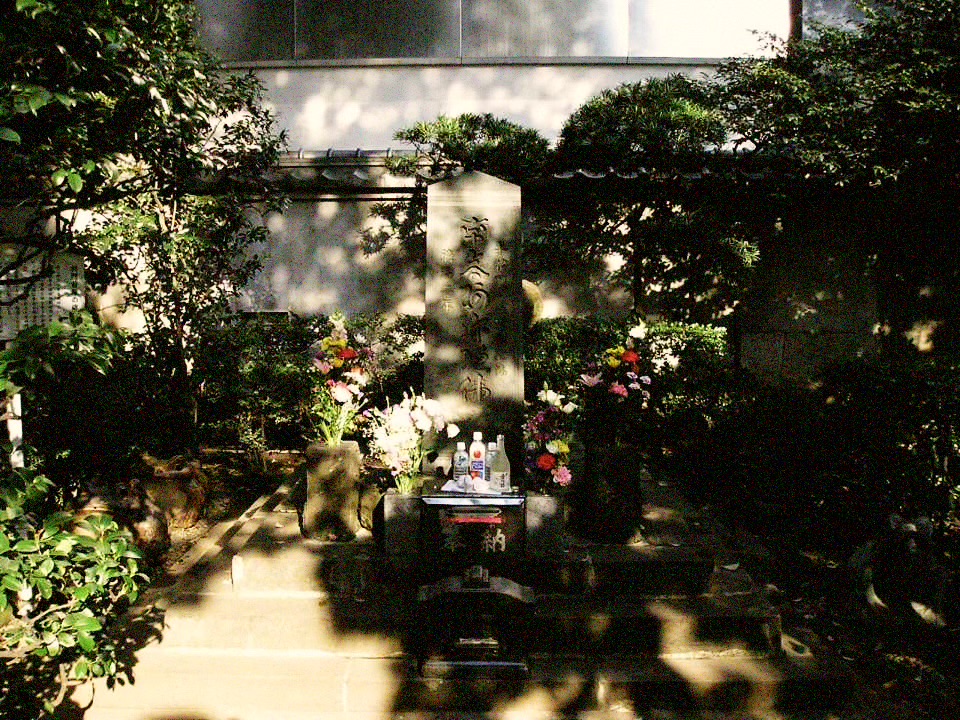
Ten minutes on foot from Kanda Myōjin, in the heart of Tokyo’s Otemachi financial district, surrounded by the headquarters of Japan’s largest banks and the offices of multinational corporations, is a small enclosed area behind a low stone fence. Trees. A stone lantern. A modest mound. The donation fund’s account balance is held under the name Taira no Masakado.
This is the Kubizuka, the head mound. The spot where the flying head came to rest a thousand years ago and has remained there through everything Tokyo has become around it.
The record of what happens when the site is disturbed is long enough to constitute a pattern.
When the Great Kantō Earthquake of 1923 destroyed the Finance Ministry building on adjacent land, the mound itself remained standing in the rubble. The ministry began reconstruction and excavated the burial site in search of the skull. Nothing was found. A temporary building was erected over the site. Three years later, Finance Minister Seiji Hayami died suddenly. Fourteen of his colleagues followed over the next two years, with deaths, illnesses, and accidents accumulating until the temporary building was partially demolished and annual purification rituals began.
In 1940, lightning struck the Finance Ministry. The fire that followed destroyed the new buildings erected near the mound. The strike occurred almost exactly one thousand years after Masakado’s death.
When American occupation forces cleared the area in 1945 to build a parking lot, a bulldozer overturned and killed its driver. Local officials explained the significance of the site to American command. The project was abandoned. Purification rituals were performed. When Japan regained control of the land in 1961, and new construction began on adjacent buildings, workers fell ill. A figure with disheveled hair appeared in photographs taken near the mound. Representatives from local businesses began praying at the site on the first and fifteenth of each month. They still do.
Whether you attribute any of this to coincidence, superstition, or something else is your decision. The rituals continue regardless of interpretation.
The Shrine Today
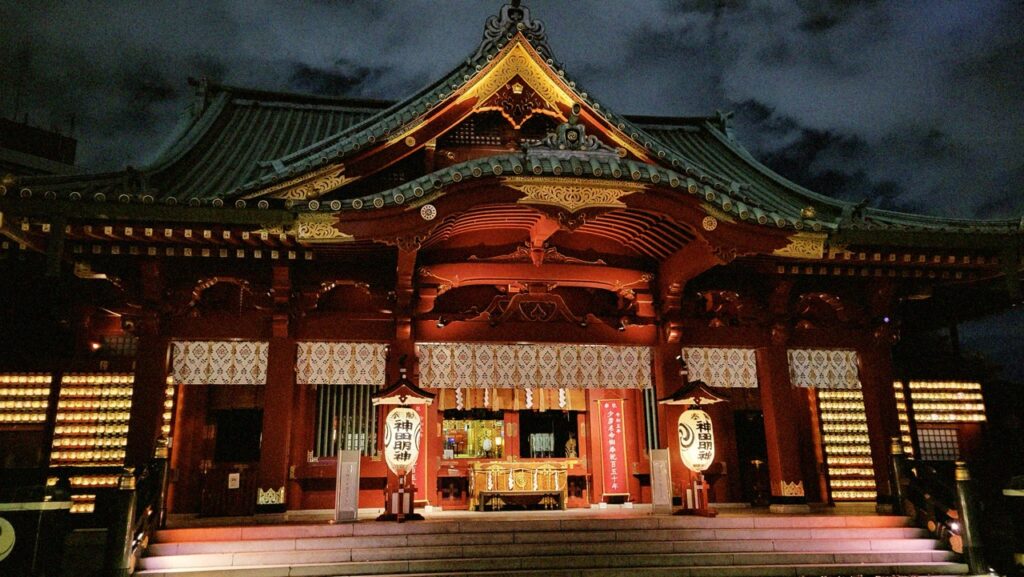
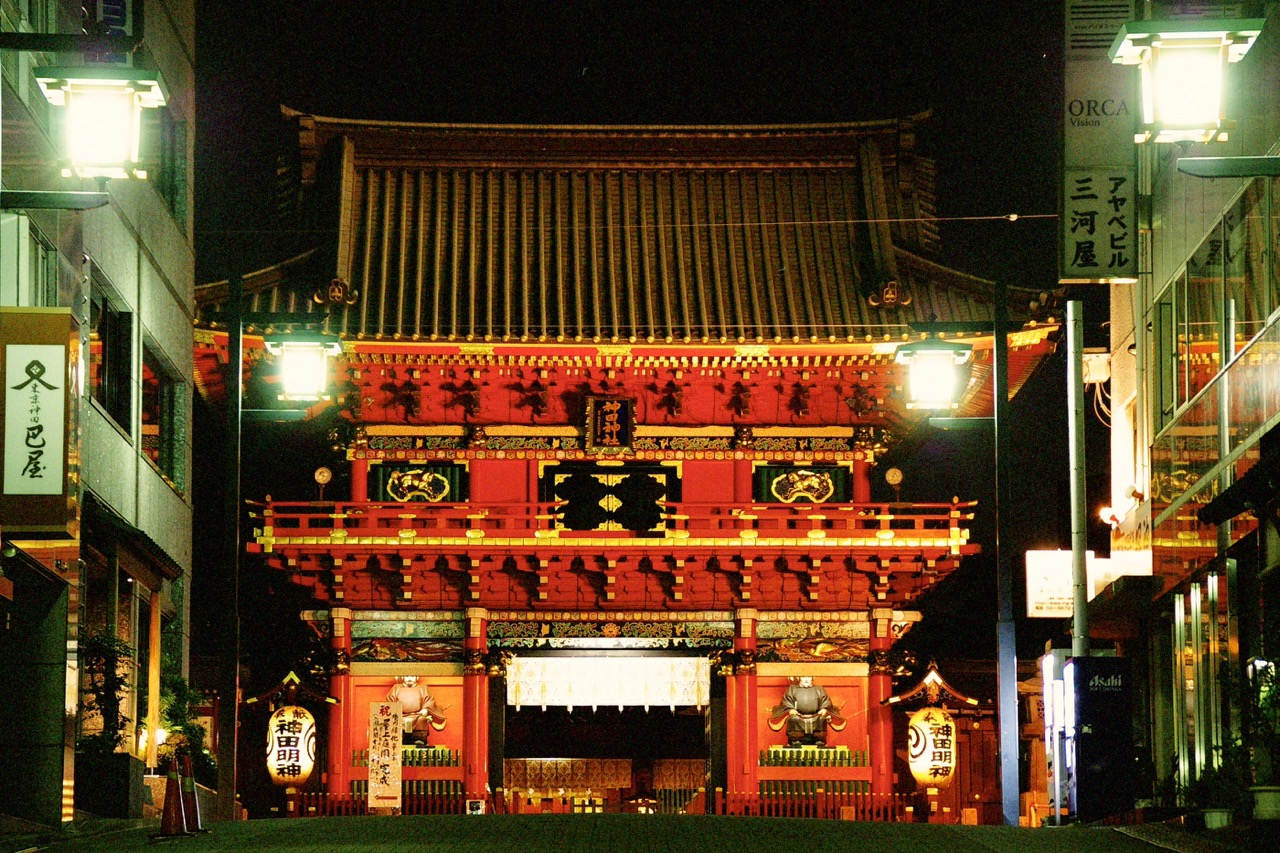
The current shrine complex largely dates to 1934, when it was rebuilt in steel-reinforced concrete after the earthquake. It was reconstructed again after the 1945 firebombing, and the present Zuishinmon Gate, completed in 1975 in cedar, has its vermilion lacquer restored to something approaching Edo-era grandeur.
Three deities share the main sanctuary. Daikokuten, the original. Ebisu, god of fisheries and commerce, patron of the merchants and entrepreneurs who still come in numbers from the surrounding business districts. And Masakado.
The proximity to Akihabara has produced its own current of the contemporary. Talismans to protect laptops, phones, and electronic equipment are available at the shrine office. The ema plaques, on which visitors write their wishes and hang them for the deities to read, often feature anime-style artwork. The shrine has formal collaboration agreements with Inuyasha, My Hero Academia, Animal Crossing, and others. There are crane machines dispensing fortunes. This coexistence of ancient dread and modern pop culture is not a contradiction; it is simply how a shrine that has survived 1,270 years adapts to whichever century it finds itself in.
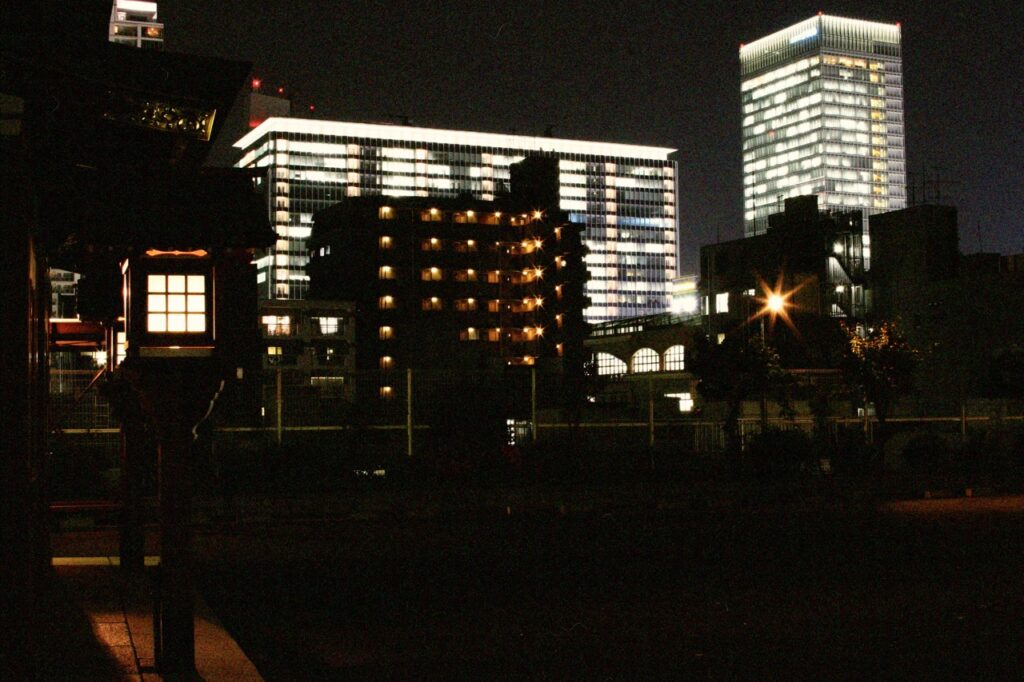
At night, when the lanterns illuminate the Zuishinmon Gate and the crowds thin, the place reverts to something older. The Akihabara noise fades. The gate turns red against the darkness. Kanda Myōjin was built to stand between the capital and whatever comes from the demon gate direction. After 1,270 years of practice, it is still doing that job.
Getting There
Kanda Myōjin is in Kanda, Chiyoda Ward, a five-minute walk from Ochanomizu Station. The Kubizuka is in Otemachi, a one-minute walk from Otemachi Station. The two sites belong together. Visit both.
At the Kubizuka: Do not take selfies. Do not touch the mound. The people who maintain it are not doing so ironically.
Related: Yotsuya Kaidan — Japan’s Most Famous Ghost Story/ Harakiri Yagura — The Cave Where a Shogunate Died