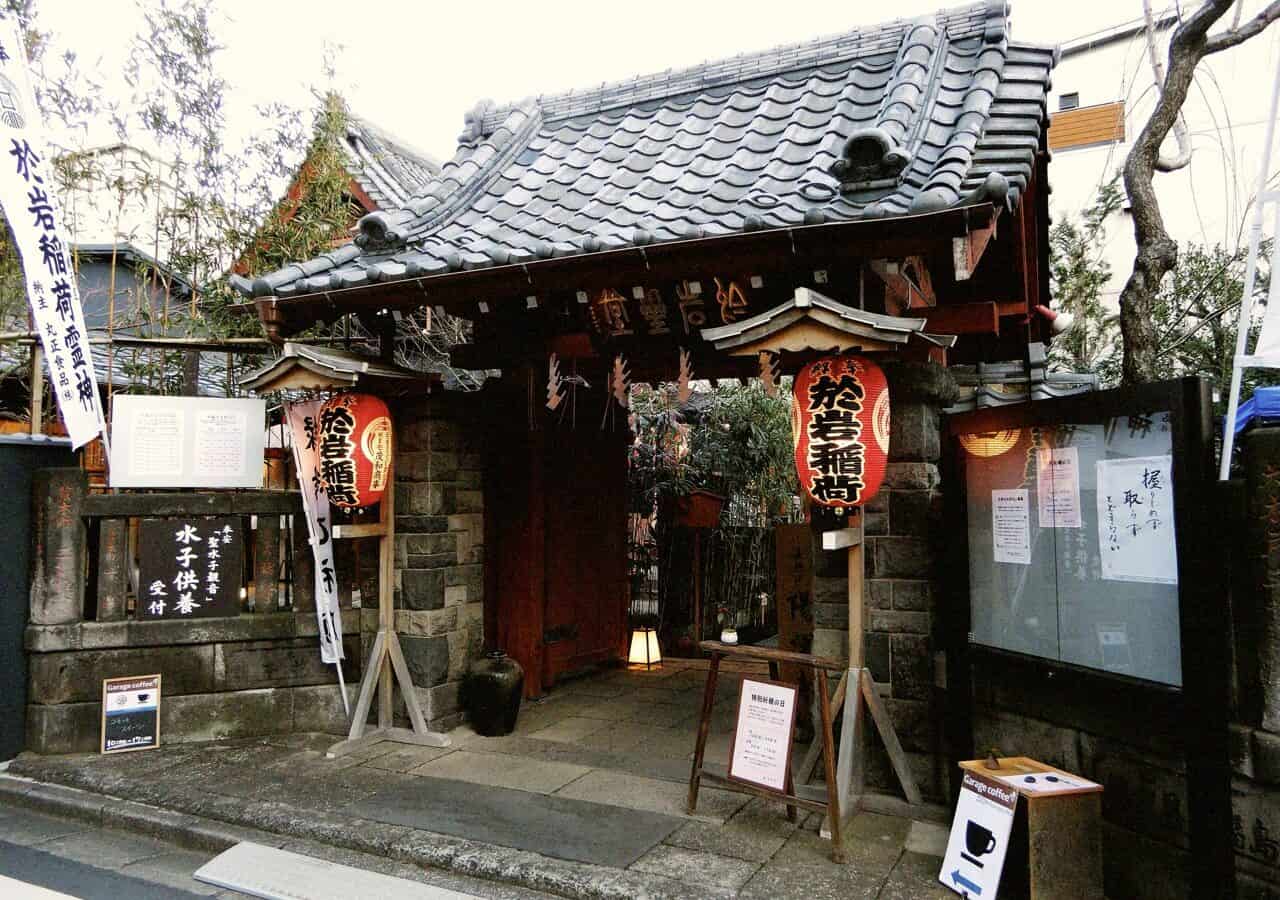
Just steps from Oiwa Inari Shrine, a Buddhist temple sits diagonally across a narrow residential street. The two are almost next door. One is Shinto, Japan’s indigenous belief system, centered on kami, spirits, and deities woven into the natural world. The other is Buddhist. Both are tied to Oiwa.
Two Traditions, One Name
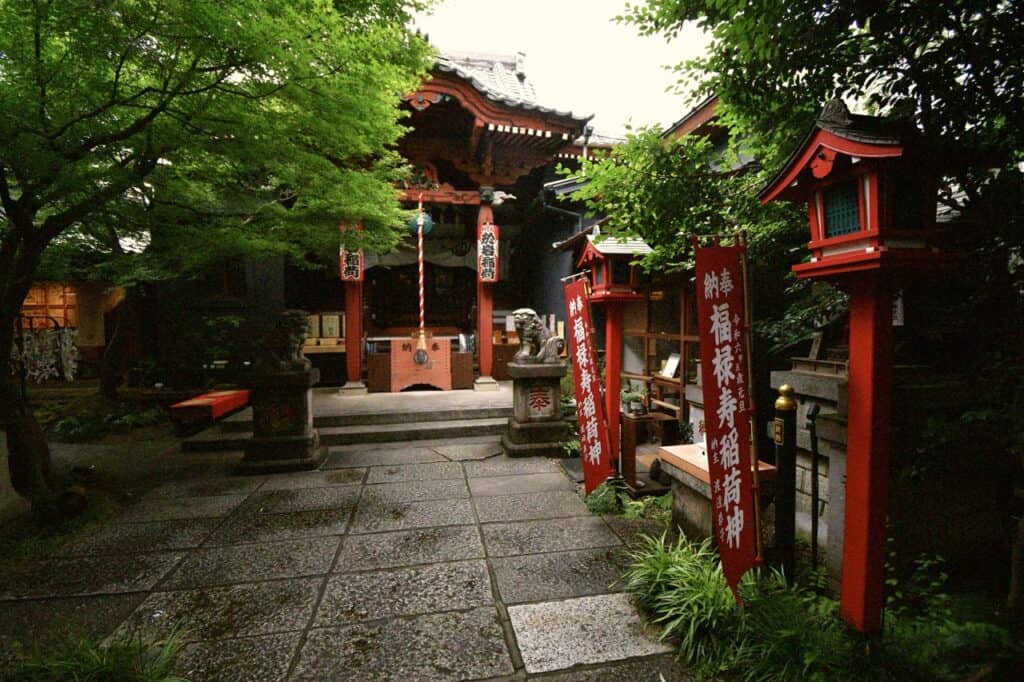
Yōunji Temple belongs to the Nichiren school, which is founded on devotion to the Lotus Sutra and the chant Namu Myōhō Renge Kyō. Within this framework, Oiwa is understood not as a supernatural figure but as a historical woman, someone who, in life, was connected to the Tamiya household in Yotsuya and deserves continued remembrance. Her grave is here, and the temple has maintained it.
This is a different account of her than the one most people carry. The version that spread through popular culture came from Tōkaidō Yotsuya Kaidan, the kabuki play of 1825, in which Oiwa is a wronged wife who returns after death, poisoned, disfigured, implacable. That portrayal became dominant. It drove the legends, the rituals, and the habit of actors visiting the nearby shrine before daring to perform her story. It is compelling, and it is theater.
What the temple preserves is quieter and, in its own way, more unsettling. A woman who actually lived. A grave that has endured fires, wars, and the surrounding city’s modernization. Ema plaques and amulets from visitors seeking specific things, such as stability, connection, and the repair of difficult relationships. The foliage softens the site’s edges without obscuring it.
What Burned and What Was Restored
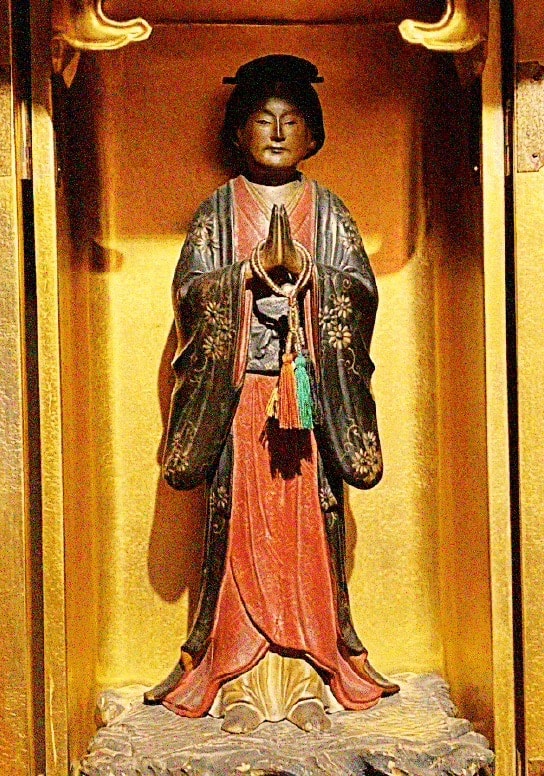
The original grave was destroyed in a fire in 1879. The site was left vacant for a time. After the war, both the grave and its associated observances were restored. What stands now is not the original, but the commitment to maintain it remains unbroken.
That continuity is what makes the temple worth considering separately from the shrine across the street. One site holds the legend, the theatrical, folkloric, vengeful Oiwa. The other holds the record, the historical woman, the preserved grave, and the doctrinal care of a Buddhist institution that has chosen to remember her on different terms.
They developed along different lines without coalescing into a single unified story. Oiwa’s legacy survived precisely because it was never consolidated. It remained plural: the ghost and the person, the shrine and the temple, the performance and the grave.
The Neighbourhood
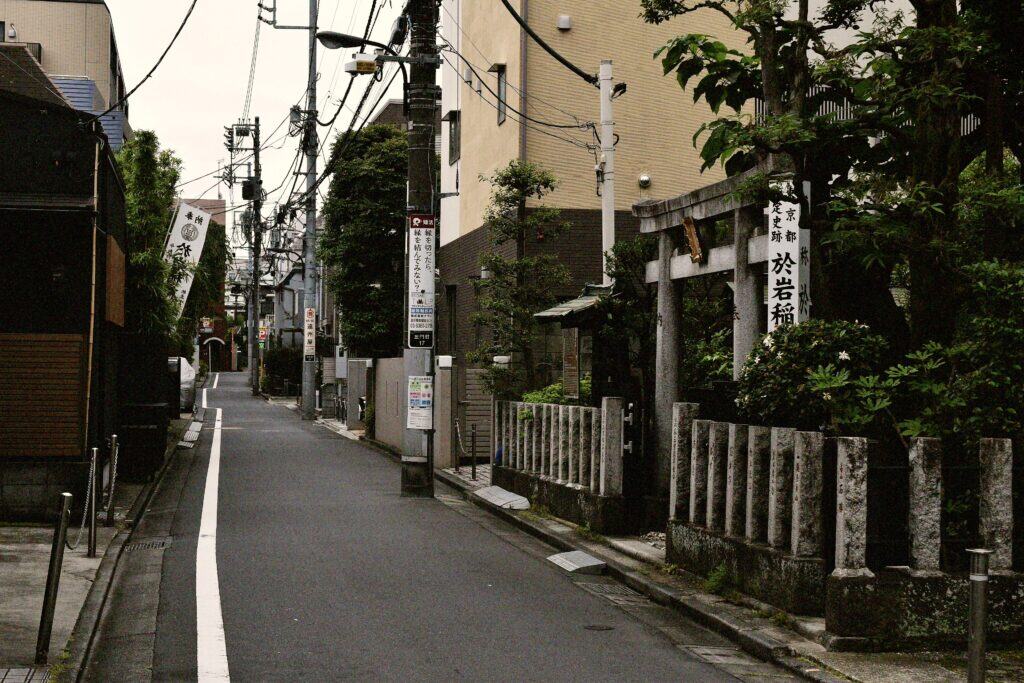
There is a tea house nearby, Ryūryū, serving matcha if you want a place to sit after visiting. The strict division between the sacred and the everyday is not much observed in this part of the city. Temples, shrines, small shops, and residential buildings press up against one another without ceremony. That compression is its own kind of atmosphere.
The two sites together take less than an hour, but that is probably the wrong way to approach them. Yotsuya rewards slowness. The neighborhood has been modernized, yet it has not quite let go of what happened here, or of what people decided happened here, which, in the end, may be the same thing.
Getting There
Yōunji Temple is at 18 Samoncho, Shinjuku-ku. The nearest station is Yotsuya-sanchome on the Marunouchi Line. Oiwa Inari Shrine is about a minute away on foot. Visit both; they are incomplete without each other.
Related: Yotsuya Kaidan — Japan’s Most Famous Ghost Story/ Oiwa Inari Shrine — The Ghost Shrine of Yotsuya