Kabuki actors still come here before performing her story. Some quietly refuse to perform it at all.
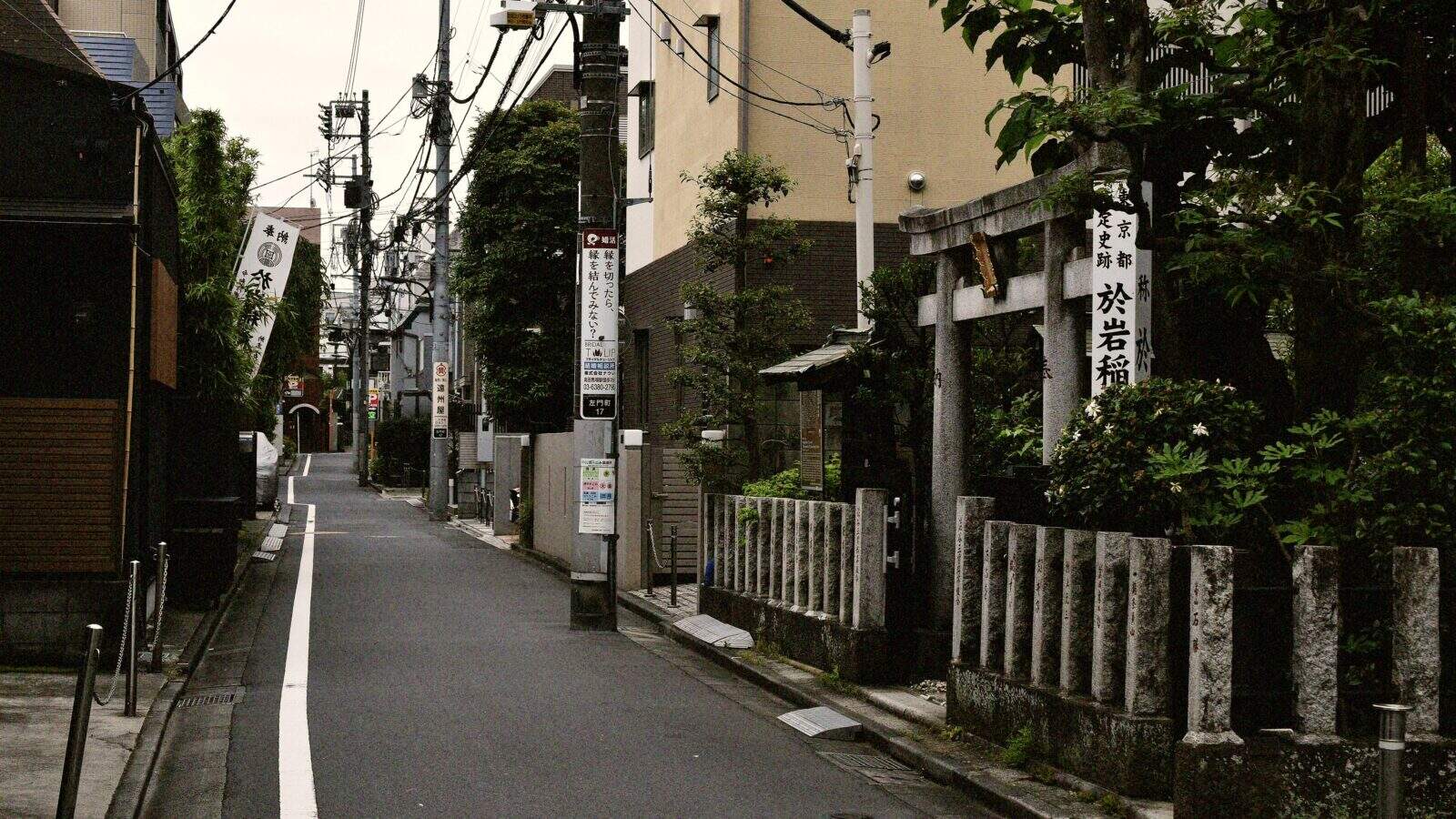
The shrine they visit is easy to miss. A small stone torii marks the entrance to Oiwa Inari Jinja, tucked away on a residential street in Yotsuya, central Tokyo. The structure is modest, and the approach is narrow. Nothing about the exterior suggests that this is one of the city’s more charged sites, a place where a woman’s name became something larger than history and where that name still carries weight.
The Woman and the Legend
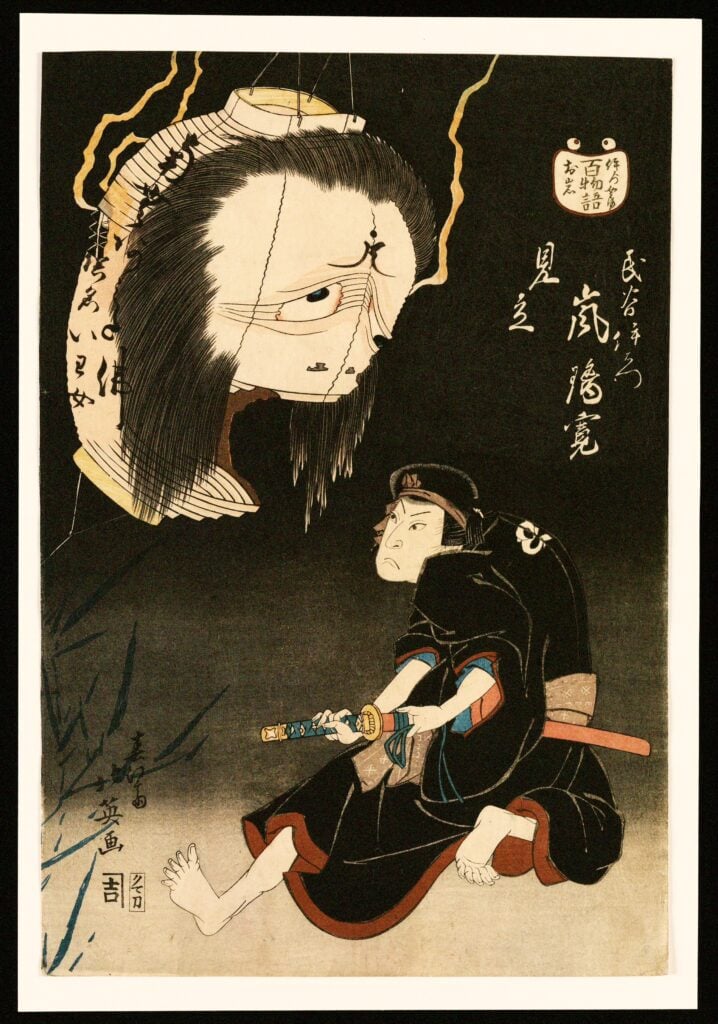
Oiwa was a real woman, or at least she is believed to have been a figure from the early Edo period associated with the Tamiya household in Yotsuya. What happened to her is disputed and has been layered over centuries of retellings. The version most people know comes from Tōkaidō Yotsuya Kaidan, the kabuki play written by Tsuruya Nanboku IV in 1825. In it, Oiwa is betrayed by her husband, Iemon, poisoned with a disfiguring compound, and driven to a death that does not end. She returns. Her face, already ravaged by the poison, becomes the image: one eye drooping, her long black hair falling loose, a portrait of wrongdoing that refuses to be buried.
The play is widely regarded as Japan’s most famous ghost story. What it did to the historical woman, if there was one, is harder to say. It folded her into folklore, theater, and an idea of female vengeance that has outlasted its source. What remains at this shrine is not the legend, exactly. It’s something quieter. The place where the name is still taken seriously.
The Shrine Itself
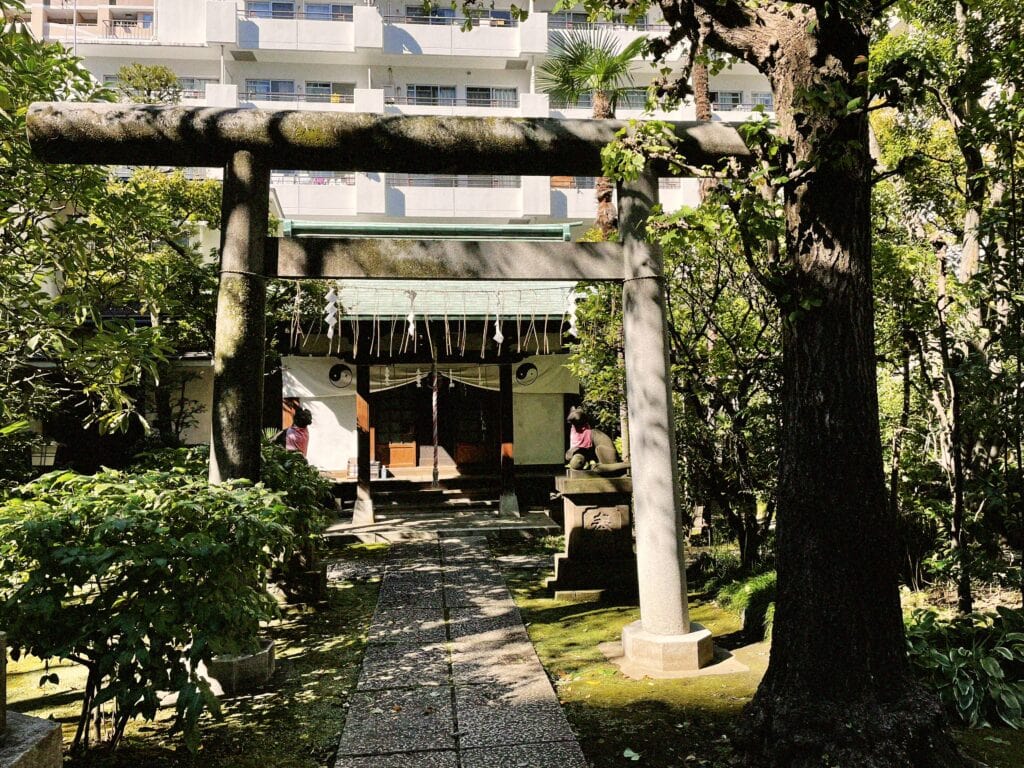
Inari is a kami associated with rice, fertility, and worldly prosperity, commonly represented by fox imagery, the fox as messenger and as intermediary between the human world and something beyond it. The connection to Oiwa here is not doctrinal. It developed over time through the accumulation of belief and practice, as visitors came not for visual spectacle but because the site sits at a crossroads of memory and need.
The shrine has no elaborate architecture. Entry is modest. Its importance is not announced by scale. What has been attached to it over time, the stories, the rituals, the habit of actors pausing here, is carried in the atmosphere rather than in the structure. There is something about its smallness that feels appropriate. Oiwa’s story is not a grand one. It is specific and domestic: a woman wronged within a household, within a marriage, in a neighborhood that still exists.
The proliferation of Oiwa shrines over the centuries was not purely devotional. Multiple Oiwa Inari shrines were built, in part, because they were profitable. Popular with kabuki actors, they also drew visitors from the geisha world who believed Oiwa’s vengeful spirit could punish infidelity. Meiji-era newspapers record a man repeatedly scheming to open another. The local economy built around her name was real. This doesn’t diminish the belief. It shows how quickly sincere veneration and commercial opportunity find each other around any sufficiently powerful story.
The Ritual Before the Stage
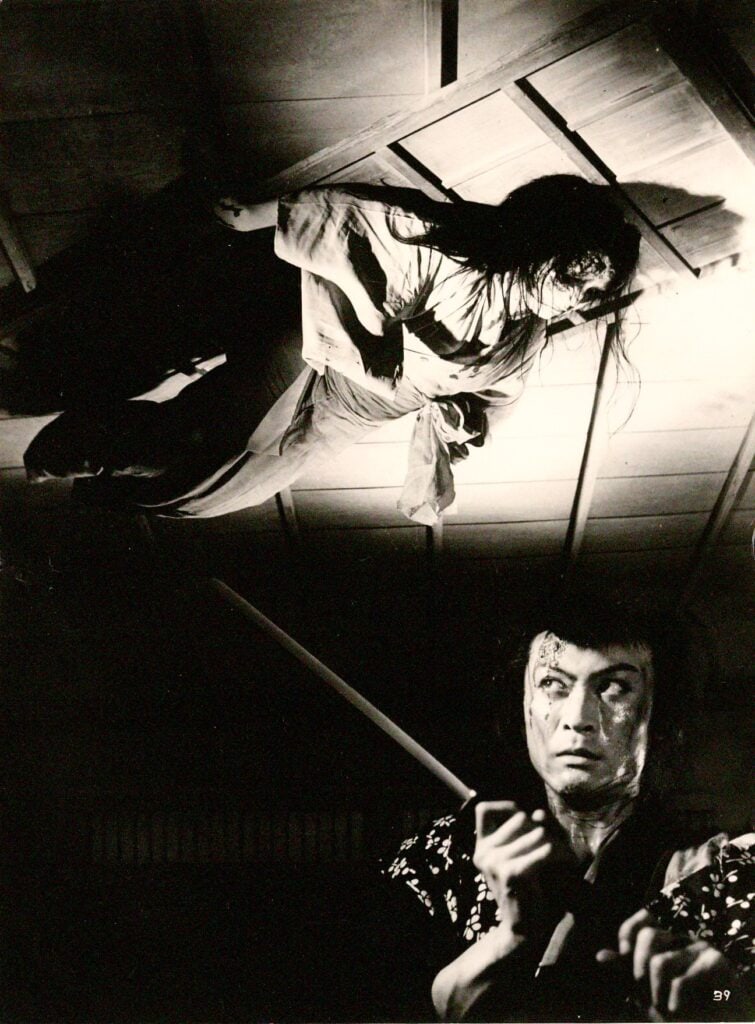
The tradition that sets this shrine apart from mere historical curiosity is still practiced today: actors visiting before performing Yotsuya Kaidan ask Oiwa’s permission. The ritual has developed its own logic over time. Productions that have skipped it have, over the years, acquired a reputation for accidents, injuries, and misfortune on set and stage. Whether you put weight on that or not, the actors who come here clearly do. Some, as noted, decline the role entirely rather than risk the performance.
There is a version of this that is pure superstition and another that is more thoughtful. A woman was wronged; her story was taken from her and turned into entertainment, and the least the entertainers can do is ask. That reading requires no belief in the supernatural at all.
Getting There
Oiwa Inari Shrine is in Yotsuya, Shinjuku-ku. The nearest station is Yotsuya-sanchome on the Marunouchi Line. The shrine itself takes only a few minutes to visit. It is small, as noted, and does not try to detain you. The surrounding neighborhood rewards a slower walk. Yō-gen-ji Temple, where Oiwa’s grave and memorial are maintained, is one minute away on foot. Visit both. They are incomplete without each other.
Related: Yotsuya Kaidan — Japan’s Most Famous Ghost Story/ Yōunji Temple — Oiwa’s Grave and the Other Memory of Yotsuya