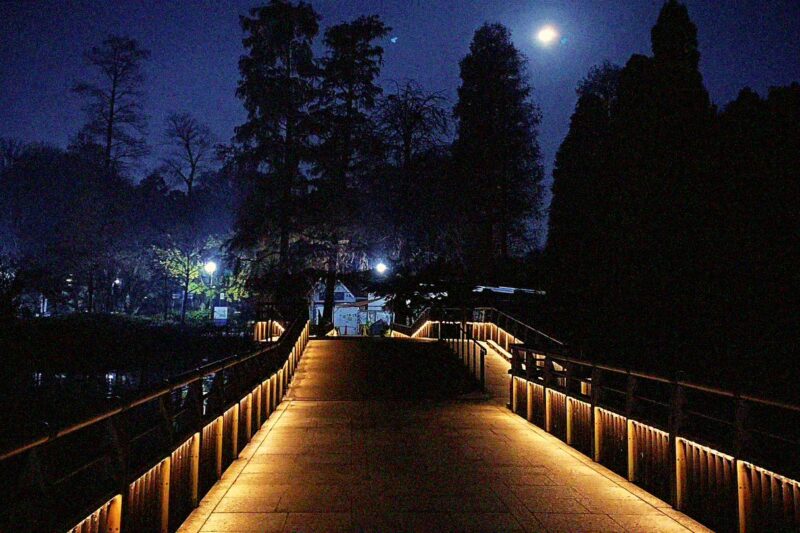
It was COVID Kyoto. The city had never been this empty, and it would never be again, a city now littered with tourists treating it like a cultural Disneyland, but not that night. The bamboo forest at Arashiyama, usually shoulder-to-shoulder with visitors, was completely abandoned. The whole district was quiet, with crickets in the undergrowth, in a way that felt less like a public health measure and more like how the place was supposed to feel before the crowds arrived. My wife, girlfriend at the time, and I had made the trip from Osaka for the day.
I had been reading online about haunted spots in Japan. Not out of belief, I was the kind of person who needed empirical evidence for everything, which, in retrospect, makes it strange that I believed in Wi-Fi, love, and other things I couldn’t see. My wife grew up here. She had her own understanding of these matters, delivered simply: spirits are real, and you do not go to temples at night. That was a settled fact for her. I found it charming.
I had a place planned. The tunnel. Many urban legends in Japan attach themselves to tunnels. The liminal logic is obvious, the passage between one place and another, and this one had accumulated more than most. We rode bikes out from the cobblestones of the old town, past the last of the restaurants, past the point where the tourist infrastructure stops. From a distance, you can see it. And from a distance, it already looks wrong.
My wife stopped. “I’m not going any further.”
Okay, suit yourself.
I kept pedaling. The road runs straight toward the entrance, while another road curves away to the right. Part of me wanted to take that turn. My skin was tightening the closer I got, my body apparently more attuned to the situation than my brain. In my head, I was replaying every Japanese horror movie I had ever seen. I kept pedaling anyway. I needed to prove something, though I couldn’t have told you what.
I got to the entrance and heard myself say out loud: “Nope.”
I stayed anyway. The atmosphere was heavy in a way that didn’t seem explained by darkness or isolation. I took out my phone and started taking pictures. Later, when I looked at them, they came out blurry and distorted, even though I was standing as still as I could. I don’t have a good explanation for that. If you find yourself at the entrance at midnight, perhaps make the sign of the Cross. I still mocked that practice at the time.
The Number in the Stone
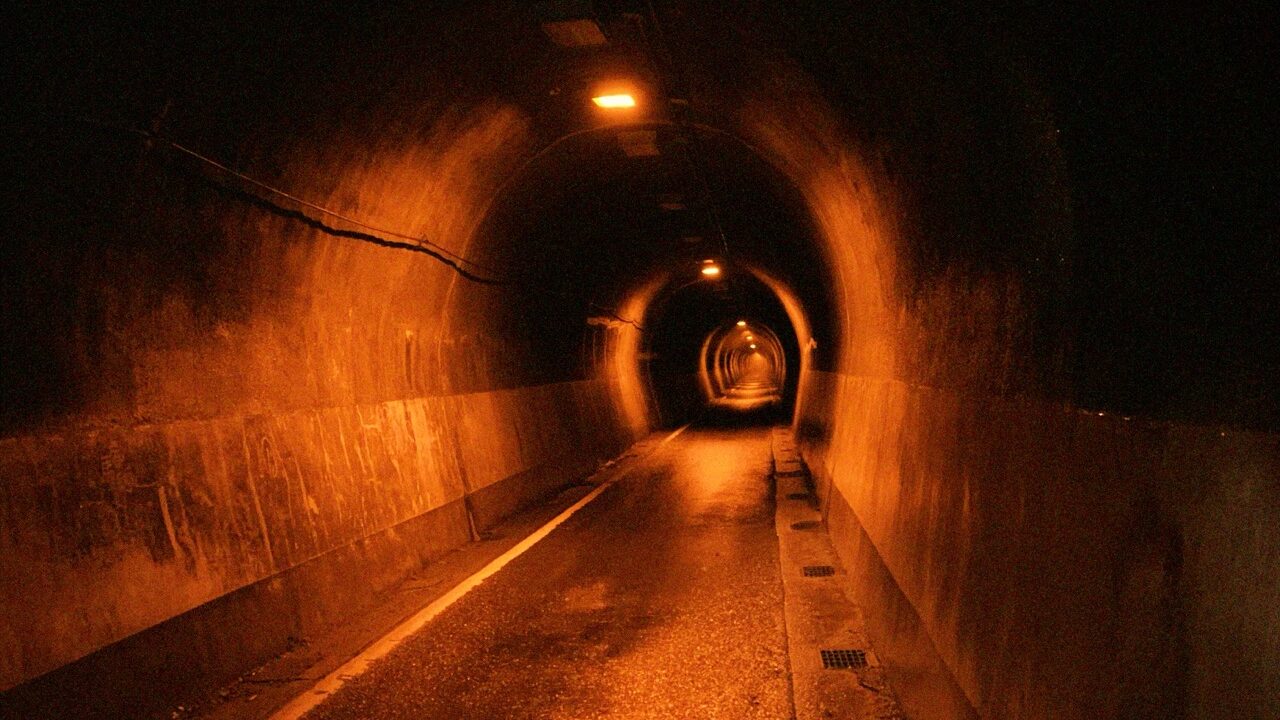
The tunnel is said to be 444 meters long, though some measurements put it closer to 500. The legend insists on 444, and the number matters more than the measurement. In Japanese, the number four is read as shi, the same pronunciation as the word for death. Four is avoided in hospitals, apartment buildings, and the numbering of floors and rooms, the same way thirteen is quietly dropped in the West. A tunnel carrying that number, cut through a mountain on the edge of a city with Kyoto’s particular history, carries it the way a scar carries its story.
Built in 1927 during the Taisho. era, the tunnel connected the Arashiyama district with the small mountain settlement of Kiyotaki. Working conditions were brutal, and deaths among the laborers who built it are on record. Their names are not. This has its own parallel in urban legends elsewhere, the bridges of New York among them, where construction deaths become absorbed into the structure itself. Whether or not you believe in that kind of transmission, it is a grim foundation for any place’s
Kyoto’s history is not the serene cultural postcard it is often sold as. Centuries of war, political upheaval, and concentrated power have left what the Japanese call shinrei spots, spiritually charged locations, across the city and its surrounding mountains. The tunnel sits at the edge of all that, on a road few tourists ever take.
What People Report
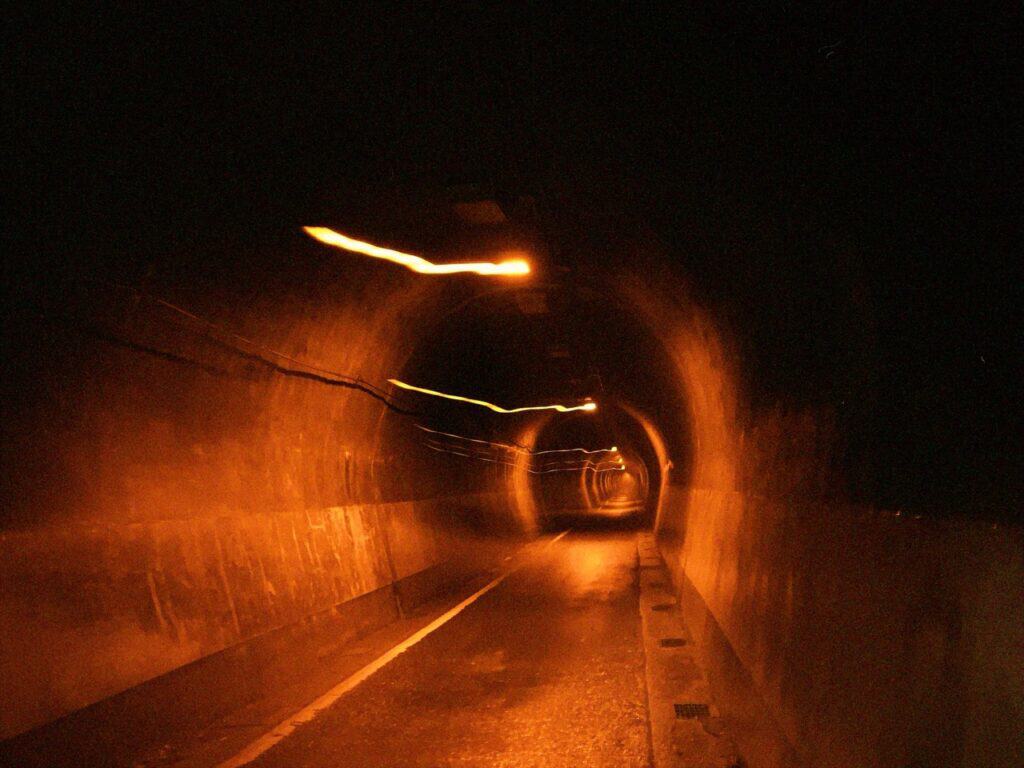
Japan has a long relationship with tunnels and liminal spaces as sites of ghostly encounter. Kiyotaki is among the best-documented of these, with incidents consistent enough across independent sources to constitute a record rather than a rumor.
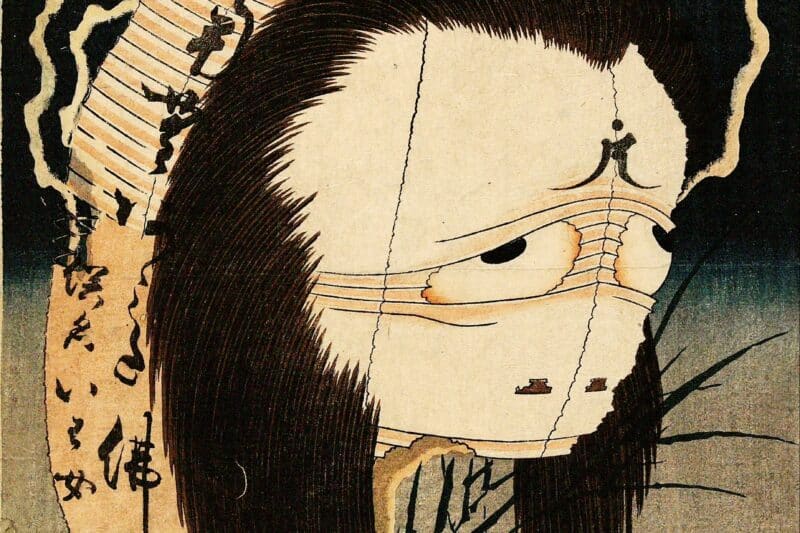
The most persistent reports: a woman’s scream heard from the forest surrounding the entrance, not from inside the tunnel but from the trees. A woman in white seen running from the tunnel and throwing herself onto the hoods of cars stopped at the traffic signals outside. The white kimono is the burial garment in Japan.
Physical symptoms, including dizziness, nausea, and headaches, are reported by visitors inside the tunnel. The practical explanation is real: the tunnel is single-lane, poorly ventilated, and exhaust fumes build up in the enclosed space. Whether that accounts for all reported cases is a question each visitor answers for themselves. The tunnel’s length also appears to change on the return journey, though this, too, has a practical explanation: the slope runs downward from Arashiyama toward Kiyotaki, making the uphill return feel deceptively longer. Whether the slope explains the reports is another matter.
The consistent warning across all sources: whatever occurs in this tunnel occurs at night. An alternative route is recommended after dark.
I went at night. My wife stopped at the entrance. My photographs came out distorted. I am a reformed skeptic working through the implications.
The Mirror Test
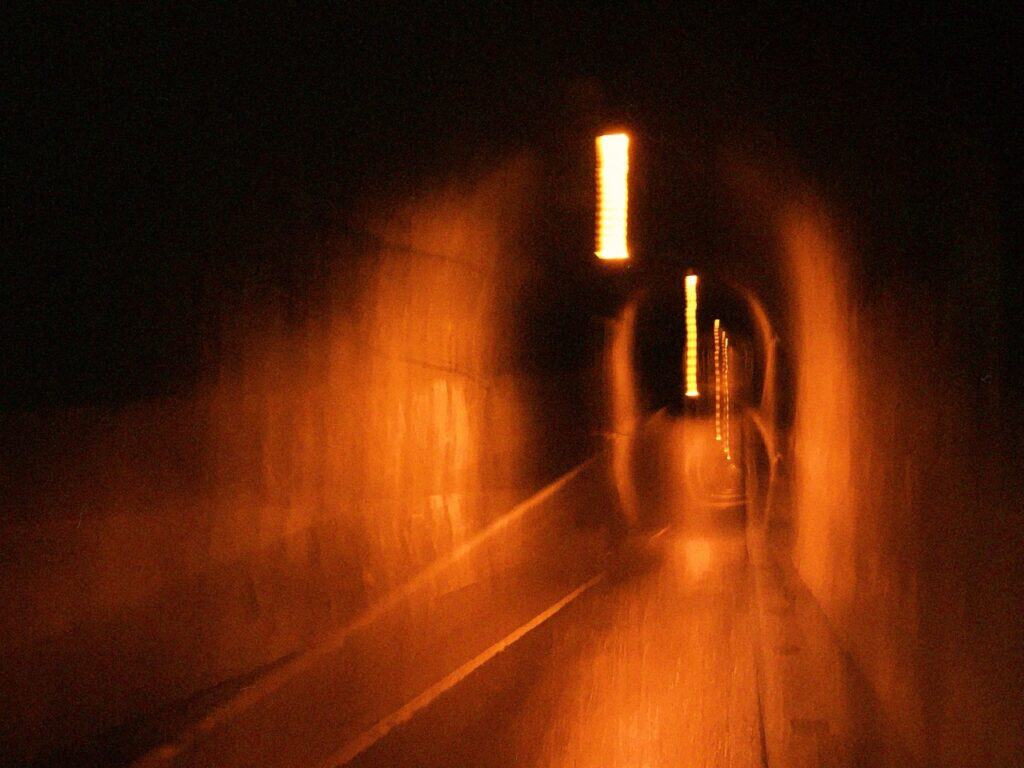
There is a specific ritual associated with the Kiyotaki Tunnel. Before entering, you are supposed to look into a mirror. If your reflection appears distorted or somehow wrong, you should not go in.
This sounds like superstition until you are standing at the entrance at midnight with a phone camera. I did not know about the mirror test when I was there. I am choosing not to retrospectively interpret my distorted photographs. Some doors are better left as questions.
The Surroundings
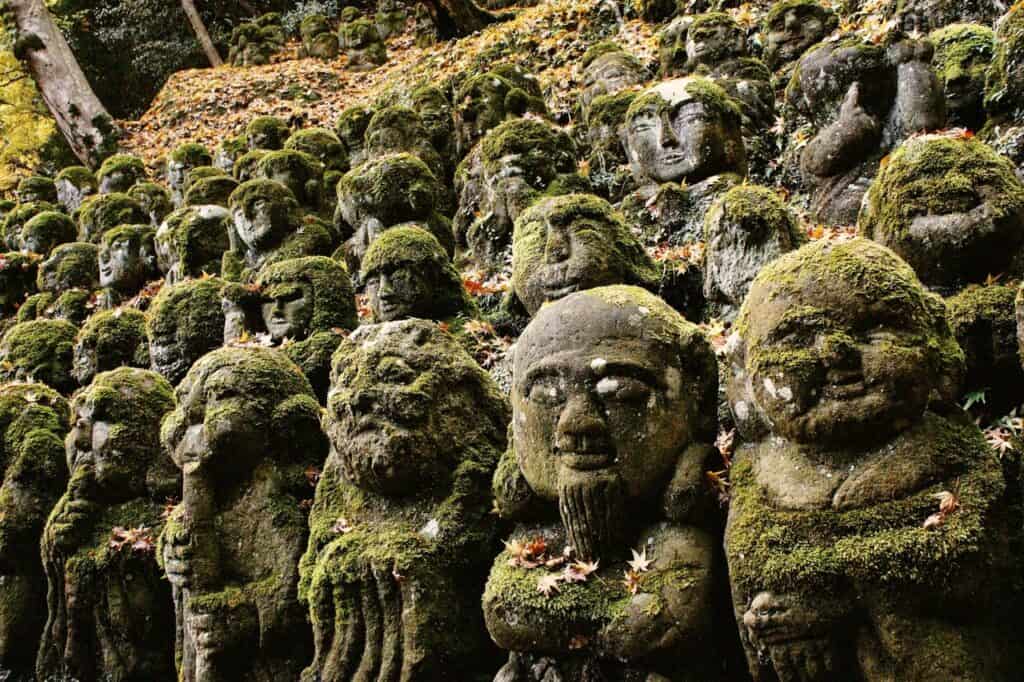
The road to Kiyotaki Tunnel passes through one of the quieter, more genuinely atmospheric corners of the Arashiyama district, the part most visitors to Kyoto never reach. Otagi Nenbutsuji Temple sits nearby, its grounds covered in 1,200 stone rakan figures, each carved by a different amateur worshipper and wearing a slightly different expression. Mossy, weathered, and arranged across a hillside in the forest, it is the kind of place that would feel uncanny even without a haunted tunnel nearby.
Neither site is especially dramatic on its own. Together they produce something that lingers.
Getting There
Kiyotaki Tunnel is accessible by bicycle from central Arashiyama, following the road past Otagi Nenbutsuji Temple toward the mountain. At night the road is unlit and quiet in a way Kyoto’s tourist districts are not.
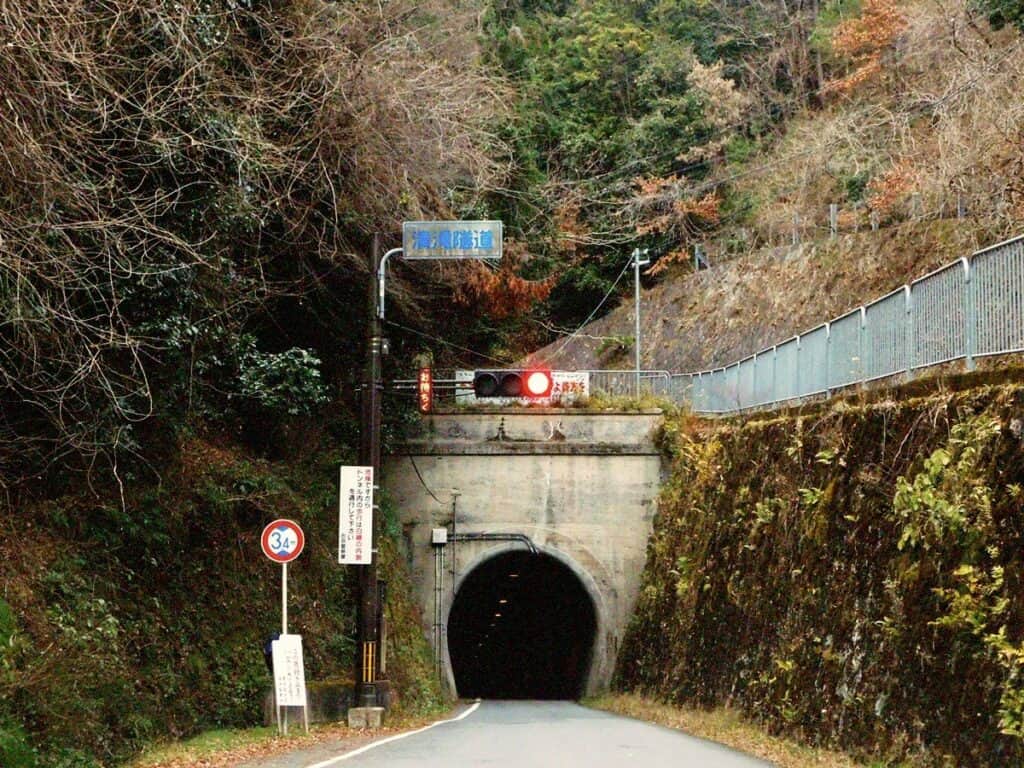
The tunnel is single-lane, with traffic signals at each end. Daytime visits are unremarkable. If you go at night, the tunnel’s reputation is entirely nocturnal, and an alternative route through the mountains is clearly signposted. The choice, as always, is yours.
My wife made the right call. I also made the right call, for different reasons.
Related: Yotsuya Kaidan — Japan’s Most Famous Ghost Story/ Inokashira Park — The Curse of the Jealous Goddess